
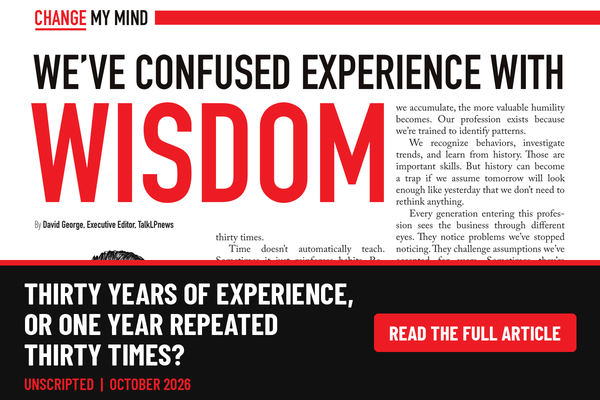
By David George, Executive Editor, TalkLPnews
Experience is one of the most respected currencies in Loss Prevention. Job postings ask for it. Promotions reward it. Conference panels celebrate it. We often introduce ourselves by saying how many years we’ve been in the business: Twenty years. Thirty years. Forty years.
Experience matters. I’ve benefited from it throughout my career. But recently I’ve started wondering if we’ve begun giving experience credit for something it doesn’t always produce: Wisdom.
Those aren’t the same thing. I’ve met AP/LP professionals with five years of experience who constantly question their own thinking, study new ideas, and adapt when the business changes. I’ve also met people with thirty years of experience who really have one year of experience repeated thirty times.
Time doesn’t automatically teach. Sometimes it just reinforces habits. Retail has changed more in the last decade than many of us expected. Organized retail crime has become more sophisticated. Technology has changed investigations. AI is beginning to reshape decision making. Digital commerce has blurred the line between stores and online. Customers shop differently. Employees work differently.
Yet I still hear people dismiss new ideas with a familiar phrase: “That’s the way we’ve always done it.” Maybe that’s confidence. Or maybe it’s comfort.
One of the hardest things about experience is that it can convince us we’ve already seen everything worth seeing. After enough years, our instincts become trusted companions. That’s a good thing – until those instincts start answering questions the business isn’t asking anymore.
We shouldn’t worry much about inexperienced leaders. They usually know what they don’t know. The leaders who should concern us are those who believe experience has made them unteachable because that’s where growth quietly stops.
One of the best executives I ever worked with had a habit that caught my attention. Even after decades in leadership, he would walk into meetings asking questions instead of giving answers. He wasn’t pretending not to know. He was genuinely curious whether someone else had found a better way.
That takes confidence. It also takes humility. The irony is that the more experience we accumulate, the more valuable humility becomes. Our profession exists because we’re trained to identify patterns.
We recognize behaviors, investigate trends, and learn from history. Those are important skills. But history can become a trap if we assume tomorrow will look enough like yesterday that we don’t need to rethink anything.
Every generation entering this profession sees the business through different eyes. They notice problems we’ve stopped noticing. They challenge assumptions we’ve accepted for years. Sometimes they’re wrong. Sometimes they’re exactly what we need.
The goal shouldn’t be protecting our experience. It should be combining it with fresh thinking. That’s where wisdom lives. Real wisdom isn’t measured by how long you’ve been in the profession. It’s measured by whether you’re still willing to learn from people who haven’t been in the profession very long at all.
So… Change My Mind.
If you believe years of experience naturally produce better judgment, better leadership, and better decisions, I’d like to hear why.
Send comments to “Change My Mind” at comments@talklpnews.com
David E. George, CFE, CFI is managing partner of Calibration Group, Inc. Previously, David served as vice president over Asset Protection for Dollar General Stores, a company with more than 20,000 stores in 48 states. While serving Dollar General, David was responsible for the Asset Protection field team, the Asset Protection corporate team, the Shrink Improvement team, and the Shrink Analytics team.
Read more in UNSCRIPTED
Want more conversations that go beyond the usual industry talking points? Dive into UNSCRIPTED for original stories, candid perspectives, and insights from the people shaping the future of loss prevention.