
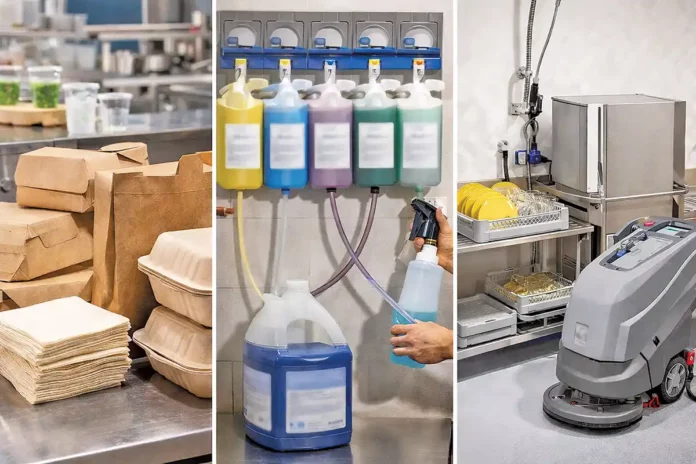
Sustainability in foodservice operations is no longer optional—it is an expectation shared by customers, regulators, and the broader marketplace. At the same time, operators recognize that achieving sustainability goals must also include smart sourcing strategies and practical product swaps that protect already pressured margins.
Today’s diners are paying closer attention to how restaurants manage waste, packaging, and overall environmental impact. Whether driven by personal values or corporate mandates, this shift is influencing purchasing decisions across every segment of foodservice—from independent restaurants to healthcare and K-12 operations. For operators, that creates both a challenge and an opportunity. The challenge lies in meeting rising expectations without increasing costs. The opportunity is to leverage sustainability as a tool to improve efficiency, reduce waste, and ultimately strengthen profitability.
Waste remains one of the most overlooked cost drivers in foodservice. It shows up in excess packaging, inefficient chemical usage, outdated equipment, and poorly managed processes. Every unused product, every over- or under-diluted chemical, and every inefficient workflow adds unnecessary cost. Beyond material expenses, waste also increases labor time, storage requirements, and disposal fees.
Smart operators also recognize that waste is often behavioral. Training and clear standards around usage matter just as much as the products themselves. The point is perfectly illustrated in this classic moment from Curb Your Enthusiasm, where portion control—of napkins, in this case—becomes the issue. While humorous, it reinforces a real operational truth: small, repeated overuse adds up quickly across a system.
Operators who take a closer look at these areas often uncover immediate savings opportunities. Simple changes—such as right-sizing packaging, implementing proper chemical dilution systems, or upgrading inefficient equipment—can deliver measurable improvements. Sustainability, when approached strategically, becomes less about environmental obligation and more about operational discipline and cost control.
Packaging is one of the most visible and impactful areas where sustainability and profitability intersect. The goal is not simply to switch to “greener” materials, but to select packaging solutions that reduce waste while maintaining performance and protecting food quality. Right-sizing packaging is one of the easiest ways to achieve this. Properly fitted containers reduce material usage, improve portion consistency, and minimize the risk of food shifting during delivery.
Overpackaging, on the other hand, increases costs, takes up valuable storage space, and can even compromise the guest experience when food arrives damaged. Lightweight, stackable packaging designs further enhance efficiency by optimizing storage and reducing shipping costs throughout the supply chain.
Material selection also plays a role, but it must be approached thoughtfully. Recyclable and compostable options can support sustainability goals, but only when aligned with local waste infrastructure. In markets without commercial composting capabilities, compostable products often end up in landfills—adding cost without delivering environmental benefit. The most effective packaging strategies strike a balance between durability, cost, and real-world disposal capabilities.
Cleaning and sanitation programs represent another critical area where sustainability and cost savings align. Many operations still rely on ready-to-use chemicals, which often lead to higher costs, increased packaging waste, and inconsistent application. Transitioning to concentrated chemical programs can significantly reduce these inefficiencies.
Concentrates require less packaging, lower transportation costs, and take up less storage space. When paired with controlled dispensing systems, they ensure proper dilution every time—eliminating guesswork and preventing overuse. This consistency not only reduces waste but also supports food safety compliance and improves overall cleaning performance.
In both front-of-house and back-of-house settings, simplified chemical programs can drive additional efficiencies. Multi-purpose cleaners reduce the number of products needed, streamline staff training, and minimize the risk of improper usage. Modern formulations are designed to deliver strong performance while reducing environmental impact, allowing operators to maintain high cleanliness standards without compromising sustainability goals.
Equipment investments, while often requiring upfront capital, deliver some of the most significant long-term returns. Energy- and water-efficient equipment—such as ENERGY STAR-rated dishmachines, low-flow pre-rinse spray valves, and high-efficiency ice machines—can dramatically reduce utility costs in high-volume environments.
Floor care is another area where efficiency gains are substantial. Automated scrubbers and compact cleaning machines allow staff to clean larger areas more quickly while using less water and fewer chemicals. In fast-paced operations, these time savings translate directly into labor cost reductions.
Back-of-house operations also benefit from high-efficiency dishmachines that optimize water, chemical, and energy usage while increasing throughput during peak periods. Labor-saving tools such as battery-powered cleaning equipment, backpack vacuums, and touch-free systems enable teams to work more efficiently and cover more ground with fewer resources.
Durability is equally important. Investing in equipment designed for heavy-duty use reduces the frequency of repairs and replacements, minimizing downtime and avoiding unexpected costs. Evaluating equipment based on total cost of ownership—rather than just upfront price—provides a clearer picture of long-term value.
Smart sourcing ties all of these elements together. Working with knowledgeable supply partners allows operators to identify products and systems that deliver both environmental and financial benefits. This includes consolidating SKUs, improving inventory management, and selecting products that reduce waste across the operation.
Ordering the right quantities and maintaining reliable delivery schedules helps prevent overstocking and product obsolescence. More importantly, it shifts the focus from unit price to overall value. The lowest-cost product is not always the most economical choice when waste, inefficiency, and labor are factored in.
Despite the clear benefits, many operators hesitate to adopt sustainable solutions due to concerns about cost, complexity, or operational disruption. These concerns can be addressed with a phased approach. Starting with small, high-impact changes allows operators to see immediate results without overwhelming their teams or budgets.
Training plays a critical role in ensuring success. Staff must understand how to properly use new products, equipment, and systems to maximize their effectiveness. Without proper training, even the best solutions can fall short of their potential.
It is also essential to focus on practical solutions rather than marketing claims. Not all “green” products deliver real operational value. Operators should prioritize solutions that align with their specific needs, infrastructure, and business goals.
Beyond cost savings, sustainability also creates a competitive advantage. Customers increasingly reward businesses that demonstrate a commitment to responsible practices. At the same time, evolving regulations around packaging and waste management are making sustainability a necessity rather than a differentiator.
When integrated into daily operations, sustainability becomes more than a compliance requirement—it becomes a strategic advantage that supports efficiency, profitability, and long-term growth.
At Imperial Dade, the focus is on helping operators navigate this landscape with practical, results-driven solutions. The team understands that every operation is different, and that sustainable success requires a tailored approach. By listening closely, evaluating current processes, and identifying opportunities for improvement, Imperial Dade works alongside operators to implement solutions that reduce waste, improve efficiency, and protect margins—today and into the future.