

@import url(‘https://fonts.googleapis.com/css2?family=Nunito+Sans:ital,opsz,wght@0,6..12,400;0,6..12,500;0,6..12,600;0,6..12,700;1,6..12,400;1,6..12,500;1,6..12,600;1,6..12,700&family=Nunito:ital,wght@0,400;0,500;0,600;0,700;1,400;1,500;1,600;1,700&display=swap’);
@import url(‘https://fonts.googleapis.com/css2?family=Handlee&display=swap’);
h3 {
font-weight: bold;
font-size: 18px;
color: #70750F;
}
figure {
padding: 4px;
margin: auto;
}
figcaption {
background-color: #f4f5f6;
color: #404144;
font-family: ‘Nunito Sans’, Arial, sans-serif;
font-size: 14px;
padding: 10px;
text-align: left;
}
.highlight {
padding: 3%;
border-top: 8px solid #207BBC;
border-bottom: 3px solid #207BBC;
width: 100%;
font-family: ‘Nunito Sans’,Arial,sans-serif;
font-size: 15px;
background-color: #EAF1F7;
margin-top: 25px;
margin-bottom: 25px;
}
.chart {
border: 2px solid #70750F;
padding: 15px;
margin-top: 25px;
margin-bottom: 25px;
border-radius: 25px;
}
.pqFull {
display: block;
border-width: 2px 0;
border-style: solid;
border-color: #404144;
padding: 1.5em 0 0.5em;
margin: 1.5em 0;
position: relative;
font-family: “Handlee”, Arial, sans-serif;
font-size: 22px;
text-align: center;
color: #0067A6;
}
.pqFull:before {
content: ‘275D’;
position: absolute;
top: -.10em;
left: 50%;
transform: translate(-50%, -50%);
background: #fff;
width: 4rem;
height: 2rem;
font: 6em/1.08em sans-serif;
color: #666;
text-align: center;
}
.pqFull:after {
content: “2013 2003” attr(cite);
display: block;
text-align: center;
font-size: 18px;
color: #404144;
}
Last week, we explored security manufacturers’ and integrators’ perspectives on the video surveillance market in 2025 and their expectations for 2026. Overwhelmingly, experts pointed to technology — especially AI, cloud and cybersecurity — as the drivers of growth and risk areas for the coming year.
Foundational Tech Trends
In speaking with manufacturers and integrators, a number of key trends emerged as being undeniably influential for the video market going forward, such as:
- Unification. “Traditionally, video was a standalone product, and access was a standalone product, and intrusion was a standalone product. … Increasingly, we’re seeing partners use a unified, integrated system as a bundle and sell it as a triple play, where it’s not really three different product categories anymore; it’s one sale,” says Brian Lohse, general manager, commercial business unit, Alarm.com, Tysons, Va.
- The Edge. “We’ve found that running massive video models exclusively in the cloud on a generic stream doesn’t actually yield the best results. The real magic happens when you run smaller, specialized models directly on the camera itself and then combine those results with our larger cloud models,” says Abraham Alvarez, vice president of product, Verkada, San Mateo, Calif. “This hybrid approach helps to achieve the most accurate and reliable outcomes for customers.”
- AV1 Video Compression. “Similar to the impact of H.264 and the shift from analog to IP, AV1 could accelerate both the adoption of IP systems and the expansion of their use cases, making high-quality video more practical at scale,” says Fredrik Nilsson, vice president, Americas, Axis Communications, Chelmsford, Mass. “In doing so, it reshapes the competitive landscape and opens the door to new innovations and applications across the industry.”
- Agentic Workflows. “Instead of object detection, systems start behaving more like an intelligent assistant that can describe scenes, answer questions and escalate what matters. That capability aligns with where industry trend reporting is heading — AI is reshaping workflows, analytics and SOC operations and not just adding features,” says Dan Kostecki, vice president of sales – North America, IQSIGHT (formerly Bosch Security Systems), Fairport, N.Y.
- Video Authenticity. “The security industry operates on the assumption that the video content we produce is authentic and can be used as evidence, whether for investigations or in courts of law,” says Leo Levit, chairman, ONVIF, San Ramon, Calif. “Tools that generate or alter content have become so advanced that you cannot, with the naked eye, see whether footage is faked. These tools are widely accessible and are often free of charge, which makes it very easy to fake security video.”
- Automation. “That’s how you scale video monitoring the right way,” says Jeremy White, founder and CEO, Pro-Vigil, San Antonio, Texas. “For us, it also means continuing to strengthen the platforms that support uptime and camera health, AI-powered monitoring and giving customers an on-demand portal that helps them make better physical security decisions.”
Clearly, technology has been the driving force behind the growth of video surveillance. Across the industry as a whole, AI is most frequently referred to as a “buzzword,” given how often it comes up at industry conferences, makes headlines and is integrated into new products and services. However, AI is quickly shifting from “nice to have” to “must have” as end users learn more about the technology and its capabilities.
“AI analytics advances and products that solve everyday problems like anti-loitering, perimeter protection and proactive notifications before an issue requires escalation are hugely popular,” says Mike Poe, director of product management, 3xLOGIC, Fishers, Ind. It doesn’t end at everyday problems; AI is also contributing to proactive solutions in video surveillance, which is exactly what customers are looking for.
To this point, Kostecki says, “AI is pushing video from detect and review to understand and act. That is driving adoption because it improves speed, accuracy and scale, especially for teams that are stretched thin.”
The true benefits of AI will come when it is implemented with discipline. “The impact on our operations and on the services we deliver is undeniable,” White says. “Simply put, you can’t scale and protect sites effectively without that combination, and I see it powering the market well into the future.”
AI is solving problems at such a rapid pace that today’s problems will not be next year’s problems, says Brian Kozlosky, founder and president, 2 Krew Security & Surveillance, Kittanning, Pa. “That’s the key behind a lot of the AI, being proactive,” he adds. “People want to know before things happen so they can save somebody’s life. I see the technology going that route.”
The cloud is undergoing a similar story, with different benefits for end users. Though cloud is not yet a “must have,” and many security experts agree that hybrid solutions are the safest, most viable option, we’re seeing cloud walk down a strikingly similar path to AI in terms of development and adoption.
#ask-sdm-ec a {
display: inline-flex;
align-items: center;
gap: 10px;
padding: 10px 20px;
font-size: 16px;
font-weight: 600;
color: #348089;
background-color: #fff;
text-decoration: none;
border-radius: 4px;
border: 2px solid #348089;
box-shadow: none;
transition: all 0.25s ease-in-out;
}
#ask-sdm-ec a:hover {
background-color: #348089 !important;
color: #fff !important;
}
#ask-sdm-ec a svg {
width: 18px;
height: 18px;
stroke: currentColor;
stroke-width: 1.8;
fill: none;
stroke-linecap: round;
stroke-linejoin: round;
flex-shrink: 0;
transition: inherit;
}
Looking for quick answers on security topics?
Try Ask SDM, our new smart AI search tool.
Ask SDM →
In fact, Gerard Figols, chief operating officer, i-PRO, Houston, says AI and the cloud are growing in parallel. “Cybersecurity is the basis that is giving confidence that these systems can keep interconnecting,” he says. “Otherwise, the data is not going to be trusted, and the data cannot connect to the cloud.”
Overall, AI is set to become the foundation of technology trends going forward, as clients ask for it and security companies integrate it. As a closing piece of advice, Anastasie Najem, product marketing manager, Genetec, Montreal, says, “Even before AI, we need to look at the foundations: architecture, platforms, the way we’re deploying solutions, really putting solid foundations in place before adding layers of technology on top of that. That will become very chaotic and difficult to piece together as organizations are growing their tech stack. It’s that there are so many technologies out there. Organizations are using so many tools, so many platforms, so many different technologies that it can become very difficult to make sure that you have a comprehensive, cohesive tech stack.”
Even before AI, we need to look at the foundations: architecture, platforms, the way we’re deploying solutions, really putting solid foundations in place before adding layers of technology on top of that.

Misguided Technology Expectations
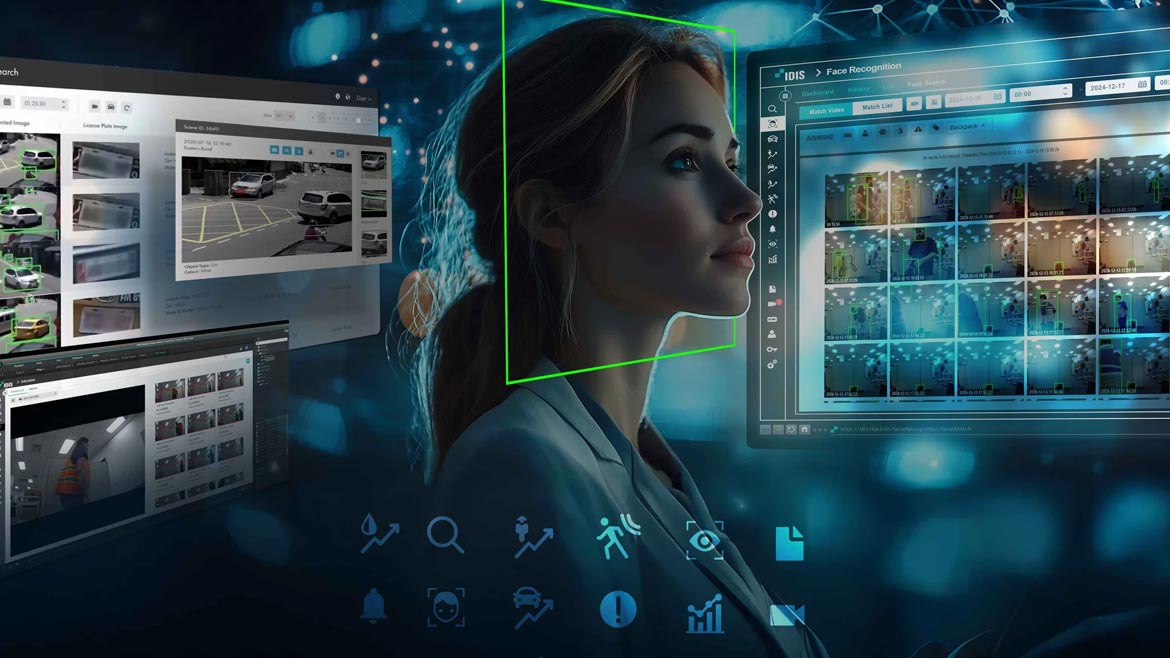
When asked, “Is there a trend that everyone’s excited about that you believe either won’t pan out, or that we have misguided expectations about?” security experts’ overwhelming answer was AI.
Gerard Figols of i-PRO thinks the term itself is overused. “We are very much surrounded by AI everywhere in our daily life. I think it needs to move into more specific use cases. Otherwise, if we keep using the term, it will lose the value,” he says.
“Some of the AI conversation is oversimplified,” adds Ryan Bailey of Knight Watch. “AI is incredibly powerful, but it doesn’t replace good system design, proper infrastructure or human decision-making. It enhances those things; it doesn’t substitute for them.”
Jeremy White of Pro-Vigil believes AI is a game changer, but adds that the broad adoption of it has often been poor. “When providers lean heavily on third-party AI, they give up control of their roadmap, and, in a security context, that matters,” he says. “The inability to control the development of future features and modeling could hinder innovation.”
The overall understanding of what AI is, or isn’t, is also widely misinterpreted, leading some to think it’s magical and performs entirely on its own. “I think the folks that understand how the larger language models work and what’s happening at the edge in the camera, what’s happening in the cloud, and can articulate that — those are going to be your realists when it comes to what AI can do,” says Brian Kozlosky of 2 Krew Security & Surveillance.
Mike Poe of 3xLOGIC believes AI has caused a widely misguided expectation that the human element of monitoring will dramatically decrease. “There are nuances in threat detection and responses that AI cannot definitively solve for without human intervention. The value of AI should be to provide additional insights into a situation, not full automation,” he says.
AI wasn’t the only answer to this challenging question, though. “I also think some of the excitement around mobile surveillance trailers is misplaced,” White says. “Some are actively monitored, and some are basically just recording hours of footage for later review. The market will sort that out quickly. The winners will be the companies that deliver real deterrence and real outcomes, not just a flashy box in a parking lot.”
Dan Kostecki of IQSIGHT doesn’t believe the issue is that the biggest trends won’t pan out. “It is that the industry has zero patience for cool demos that do not solve real problems,” he says. “The winners will be the manufacturers and integrators that execute together and deliver solutions that reduce risk, cut response time or improve operations, not flashy concepts that do not survive contact with the real world.”
One example of a technology in the demo phase is video large language models (LLMs), which Fredrik Nilsson of Axis Communications notes have garnered a lot of attention in the form of excitement and interest. “While many companies are showing impressive demos, in practice these solutions often struggle to deliver the scalability, accuracy and tangible value that customers are willing to invest in,” he says. “It’s a reminder that innovation must be paired with practical, real-world applicability for it to truly drive market impact,” he says. “The IP camera needs to do the majority of the analysis at the edge, providing metadata and singling out frames with interesting information, in order for large language video models to be able to effectively do more detailed analysis in the cloud or on a server.”
Dean Drako of Brivo says the new world of these LLMs and AI operates differently than the simple detection models the industry has grown somewhat used to. “It’s not so much about designing modules that are hand-coded to do these detections; it’s about designing a system that can achieve the objectives that you want,” he says.
Overall, experts agree that proceeding with caution and educating themselves, their partners and their clients is going to be of utmost importance as AI continues to impact and evolve the video landscape. “There’s still an expectation in some corners of the market that AI should work perfectly out of the box in every environment,” says Kristen Plitt of IDIS. “Real-world deployments are more nuanced. The solutions that will succeed are those that deliver consistent performance, integrate smoothly into workflows and can be supported and secured long term.”
How Integrators Become Business Partners
In the coming year, security integrators will face numerous challenges, such as commoditization, separating outcome-driven solutions from offerings that don’t actually deliver in practice, keeping pace with technology and thoughtfulness when configuring solutions and approaching customers.
Keeping up with evolving technology is critical, especially with where the market is headed in terms of demand for AI and hybrid, if not fully cloud-enabled, solutions. “[Integrators] need to make sure that they keep learning about the latest technology. Otherwise, they will be left behind, and someone else will learn and will take their position,” Figols says. “They need to connect different pieces — the edge device, the platform, the applications — and then build an ecosystem that works and is useful for their end users.”
There are a few solutions for this: hiring tech-minded people and tirelessly seeking opportunities for further education, training and certifications. Taking these steps will help integrators stand out among competition. “Integrators who get fluent in AI-enabled outcomes, and who partner closely with manufacturers, will win more complex, higher-value projects because they will be selling solutions, not boxes,” Kostecki says.
Nilsson agrees that education and certification will be critical to maintaining practical knowledge and ensuring solutions are deployed effectively. “Integrators who invest in training and achieve recognized certifications can gain a competitive edge, strengthen relationships with customers and position themselves as trusted advisors,” he says. “These capabilities are increasingly essential for driving long-term business growth and should be a key part of any integrator’s future strategy.”
Integrators will also have to navigate cutting through the hype of interoperability. “Many companies claim to have ‘open’ systems, but, in practice, the data remains trapped in silos and is difficult to manage,” Alvarez says. “When data sharing is blocked by proprietary silos, it prevents the integrator from delivering the unified experience the customer is actually paying for. Solving this requires robust tools that bridge the gap between old and new.”
Each of these challenges provides an equal amount of opportunity. Take the versatility of unified solutions, for example; integrators can be more strategic when approaching their clients and position themselves as long-term advisors instead of transactional vendors.
“It’s about being smart when you approach your client that, say, has that grocery store. Instead of you saying, ‘Well, we just need to watch the cart line out front to make sure nobody’s stealing carts,’ we take that same camera that watches the entrance door and now we use it to paint a heat map, and I can tell you, ‘When your customers walk in that door, the majority of them make a right hand turn,’” Kozlosky says. “If I see that happening, I can say, ‘If you want to sell a product, put it on that end shelf and it’s going to sell more than likely greater than the product on the left side because all your people come in and make a right turn.’ It’s about presenting that information to the customer and making sure they understand how this product can help and benefit them.”
Dean Drako, founder and CEO, Brivo (formerly Eagle Eye Networks, prior to the companies’ recent merger), Bethesda, Md., says that pricing could be a real challenge when it comes to offering these special, partner-oriented services. “There need to be some fees associated with that love and care,” he says.
Kristen Plitt, vice president of marketing, IDIS Americas, Coppell, Texas, says integrators will also face increasing responsibility around cybersecurity, AI deployment and long-term system support. “At the same time, this creates major opportunities for managed services, standardization across multi-site deployments and value-based selling tied to real customer outcomes,” she says.
Lohse believes configuration and proposals will be challenges for integrators to navigate as well. “It’s no longer the case that you put up a camera and tell it to record and that’s it. Somebody’s going to have to be really thoughtful about the rules they’re configuring, at what times they’re active, on what days. … That’s going to require more time, and it’s a unique skillset. It’s going to require working closely with the customer to understand how people move around their space at various days and times,” he says.
On the proposal side, many salespeople send clunky documents that are nothing more than lists of products and costs. “I think there’s a huge opportunity and real requirement to upgrade the proposals that we’re providing customers to do true storytelling,” Lohse adds. “The proposal should understand who the customer is so it’s not just a standard template that every single person gets. That’s a new skill set in terms of building a ‘proposal for tomorrow.’ Some folks are going to really win on their ability to differentiate the proposals.”
All in all, differentiation and having a leg up against competition will require integrators to be intentional, have their pulse on the market and, possibly, start to develop new skills to keep pace with the evolving landscape.
Integrators who get fluent in AI-enabled outcomes, and who partner closely with manufacturers, will win more complex, higher-value projects because they will be selling solutions, not boxes.

What Skills Do Integrators Need?

As the industry moves further away from proprietary platforms and services and deeper into the cloud and unified solutions, the security integrators that have their pulse on the latest technological advancements and position themselves as true business partners will win the most business.
“You’re not ‘wham, bam, done, install, move on,’” says Dean Drako of Brivo. “You’re going to have to come up with solutions, not just, ‘Where do you want your cameras, buddy?’ It’s going to be a consultative kind of selling rather than quote response to bid.”
Intimate knowledge of the customer is just one of many priorities. “Top-performing integrators also excel in their knowledge of AI capabilities, cloud and cybersecurity and have the ability to integrate disparate systems using open standards,” says Alex Castaneda-Ballard of Motorola Solutions.
Integrators will also need to become intimately familiar with the opportunity for managed services and a service-oriented mindset to position themselves as top performers. “The ability to position security as a business intelligence insight will make all the difference in 2026,” says Mike Poe of 3xLOGIC.
“Education and certifications are essential here — providing practical knowledge and credibility that help integrators stay ahead,” says Fredrik Nilsson of Axis Communications. “Equally important is understanding how to sell solutions based on long-term ROI rather than just upfront costs. Integrators who master both the technical and business aspects of their solutions are better positioned to act as trusted advisors, strengthen customer relationships and drive sustainable growth.”
There are a variety of specific skills that will help integrators stand out among competition. Kristen Plitt of IDIS Americas says cybersecurity expertise, AI deployment knowledge, outcome-focused selling, strong lifecycle services and vertical-market understanding will clearly separate top performers from the rest.
Dan Kostecki of IQSIGHT (formerly Bosch Security Systems) says curiosity, consultative selling and executive discipline are integrator essentials. “The top integrators will learn the tech fast, translate it into business outcomes and solutions and deploy it cleanly. That is the same operating model we have built teams around in every role — align incentives, sharpen the process, raise the talent bar and execute with urgency,” Kostecki says.
When it comes to integration, a low price isn’t always what wins business. “We don’t sell the cheapest price in town. We don’t advertise we’re the cheapest ones. In fact, I’m probably more of the most expensive ones,” admits Brian Kozlosky of 2 Krew Security & Surveillance. “We’re more strategic as to how we do things, and then that puts us in the vertical markets that need that strategic planning. … We want to go after the whole school district, the whole prison system, staying in departmental home security. That’s where the money is, and you’ve got to have brains, and you’ve got to know the technology. … In other words, experience is critical in this industry.”
Optimism Surrounds 2026
Despite the certain-to-be dynamic state of the market in 2026, security companies, and especially integrators, widely express optimism thanks to the major technological and unification trends shaping the industry. “Customers are moving away from buying devices and toward investing in outcomes,” says Ryan Bailey, CEO, Knight Watch, Kalamazoo, Mich. “That shift creates more meaningful partnerships, and that’s where real innovation happens.”
The market is poised to respond favorably to these trends. “The pace of adoption is lining up well with the new vertical industries we’ve identified for expansion, and 2026 is shaping up to be a strong year for the video industry,” White says.
For Kozlosky, 2026 is a year of endless opportunity for people like himself, who have their thumb on the pulse of technological advancements and capabilities. “When I see technology developing, and then I see people adopting that technology, that gets me excited because I know that I’m going to see more [technology become] mainstream,” he says. “That means that more people are going to get educated, and then they’re going to want these solutions that we’ve been trying to sell.”
https://www.sdmmag.com/articles/105069-keeping-pace-with-video-surveillance-tech-and-trends