
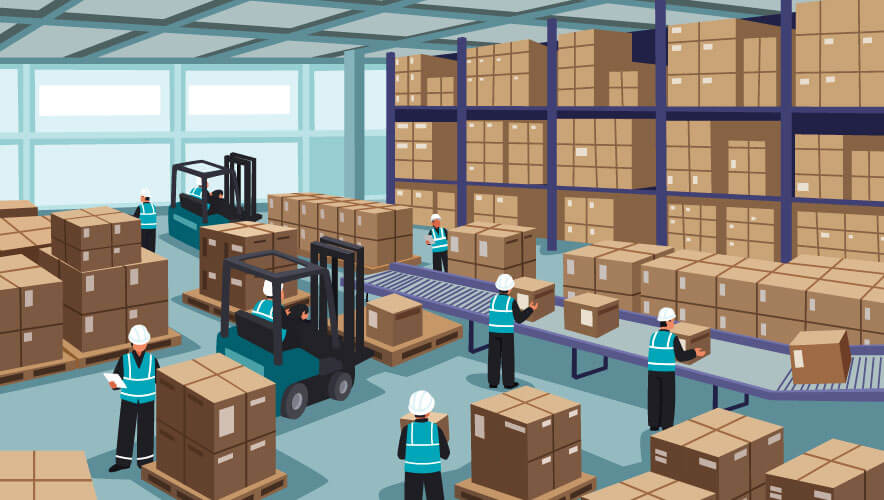
In today’s global logistics landscape, warehouses and distribution centers (DCs) are located at the intersection of the modern supply chain. E-commerce is arguably the most impactful economic movement of the past 50 years, and it places DCs—which previously stayed behind the scenes—in the spotlight. Customer expectations about fast shipping, real-time tracking, and seamless logistics have driven rapid change in DC operations, Forbes reported in 2024.
Now, DCs are the critical location where fast-paced, labor-intensive, and increasingly complex environments rely on the smooth flow of people, vehicles, and goods to keep the online retail industry moving. However, these same characteristics also make them one of the most vulnerable points in the supply chain. Issues such as cargo theft, insider collusion, documentation fraud, operational and IT vulnerabilities, and geopolitical disruptions all place the circulatory system of the modern supply chain at risk.
For the security professional, these challenges provide an opportunity to add value, which can be directly measured by reducing the risks posed to the DCs and addressing friction points that stall the pace of the business.
By using sound risk analysis and leveraging modern technologies, security professionals can introduce quantifiable solutions that contribute significantly to the enterprise’s profitability.
The complexities notwithstanding, the path to stronger warehouse security is clearer than many organizations realize.
Trends Fueling Security Innovation
The latest cargo theft trend report from CargoNet indicates a clear and sustained increase in warehouse and DC thefts. Due to both rising facility‑targeted incidents and rapid growth in document‑fraud load diversion and physical breaches, warehouses and DCs are considered top‑tier crime targets in the United States. The thefts are increasingly sophisticated, too, with suspects making greater use of precise targeting of high-value items found in DCs. This is a strong indicator that cargo thieves understand how to take advantage of modern logistics systems processes.
Among the challenges in the modern logistics system is the fact that these sites experience constant flux—shift workers, contractors, temporary labor, vendor technicians, and truck drivers all operate within the same ecosystem. Without disciplined access zones, credentialing, and vehicle-movement controls, the warehouse becomes a target-rich environment for theft and manipulation. Focusing on asset protection principles enables us to identify and layer protective measures for clearly defined restricted areas. This will allow targeting well-known, identified vulnerable areas—such as uncontrolled dock access or unchecked vehicle entry.
However, overly strict security measures can impede DC operations and slow order fulfillment, which customers are increasingly unlikely to accept. That does not mean that security should take a back seat and accept more shrink risk in warehouses—these are high-value environments, after all. As part of the risk assessment process, it is essential to understand the changes that have occurred in the supply chain, particularly in DCs that are part of an e-commerce business model.
According to BRR Architecture, “Since 2020, e-commerce has continued to grow. Packages are getting smaller and lighter, increasing the potential for products to leave warehouse facilities. Today, preventing shrinkage is now vital to facility operations, affecting what type of security is needed within a warehouse.”
The risk assessment process needs to take into account one vital but often overlooked component: What are you trying to protect?
The portability and ease of resale of the product will directly affect the solutions the security professional applies. In many cases, depending on the value and portability of the material within the DC, it may be necessary to employ technologies used at airports worldwide for staff entering and leaving the facility.
Security professionals are already on the alert for insider threats in critical areas such as research and development and mergers and acquisitions. However, it is worth remembering that DCs are subject to the same type of efforts by theft rings.
Increasing security checks at entry and exit points can help reduce risk. Implementing a locker system that prompts employees to lock up their smartphones or other devices before entering a facility can help reduce an inside source’s ability to easily transmit targeting information to theft gangs. This can be reinforced through employee screening upon entry, which serves as a visible deterrent. Similarly, screening exiting employees will also curtail the internal theft of portable high-value items.
The risk assessment process needs to take into account one vital but often overlooked component: What are you trying to protect?
Value in Motion: Supply Chain Integrity
Many companies mistakenly assume that once cargo arrives inside a warehouse, security risk decreases. In reality, the highest-risk moments often occur during custody transfers, as the previously mentioned CargoNet’s analysis of 2025 numbers indicates. In the United States and Canada, warehouses and distribution centers were the most targeted locations by cargo thieves last year, followed by truck stops.
Again, the issue of portability and value comes into play. In many cases, the products being moved in DCs can easily be slipped into a pocket or bag. In addition, it is not uncommon for organized criminal gangs and professional theft rings to gather intelligence by developing relationships with employees at locations where valuable items are stored.
These criminal enterprises are sophisticated, employing many of the tactics and manipulation techniques used by far better resourced national intelligence organizations. Some will carefully construct personas of legitimate truck drivers to drive off with tractor trailers full of products. A 2026 report found that logistics ID fraud has spiked more than 200 percent in two years. Through careful grooming, criminals often create a steady stream of products from within various distribution centers or learn which shipments are moving through to target the right items, often for resale.
The internal procedures within the warehouse are worthy of as much scrutiny as the exterior protection employed by security professionals.
While a strong security culture and investments in physical safeguards such as access control, surveillance, and security personnel remain essential, they are only as effective as the operational procedures that support them. The true differentiator in preventing warehouse theft lies in how well security is integrated into day-to-day logistics workflows.
Protecting the modern warehouse is no longer the sole responsibility of security teams operating through guards and cameras. Instead, it requires a deliberate partnership between security and logistics, with internal procedures serving as the primary line of defense against theft. In both large-scale DCs and smaller warehouse operations, the most effective security programs are those embedded directly in the flow of goods.
The reality is that theft in today’s warehouses rarely occurs through overt breaches. More often, it is the result of process gaps and breakdowns in receiving, inventory handling, picking, staging, or shipping. This is where alignment with logistics becomes critical. Security must move upstream, working alongside operation leaders to design procedures that reduce opportunity and increase accountability at every touchpoint.
For example, in a warehouse managing thousands of SKUs daily, the receiving process is a key control point. By partnering with logistics, security can help implement verification protocols such as advanced shipment notifications, structured dock scheduling, and real-time reconciliation through barcode or RFID scanning. These measures ensure that what is received matches what was expected, immediately reducing the risk of concealed shortages or overages.
The same collaboration applies deeper within the operation. During picking and staging, logistics procedures can be structured to require scan validation at each step, creating a digital chain of custody for every item. Security’s role is to ensure these controls are consistently followed, exceptions are flagged, and data is monitored for anomalies, rather than relying solely on surveillance. This approach uses operational data to highlight risk in real time.
Consider a scenario in either a large fulfillment center or a smaller regional warehouse: A high-value SKU is picked but never reaches outbound staging. Without integrated procedures, this loss may go unnoticed until later inventory checks. However, when logistics processes require scan confirmation at each transition point, the system immediately identifies the breakdown. Security and operations can then jointly investigate by using time stamps, user activity, and location data to quickly isolate the anomaly.
Additionally, simple procedural controls such as segregating duties, limiting access to high-value inventory zones, and enforcing standardized workflows can be scaled to fit any operation. In smaller warehouses, these may be manual checks. In larger facilities, they are often system driven. In both cases, the principle remains the same: Embed security in how work gets done.
Ultimately, the strongest defense against warehouse theft is not just physical presence but procedural discipline. When security partners work closely with logistics to design and enforce internal controls, organizations create an environment where theft is both harder to execute and easier to detect.
Picking Your Partners
So, how can a security professional address this internal challenge, which involves many stakeholders and often competing interests that do not align with good security practice?
Here, as with all things, it is critical to start by developing a good relationship with the key stakeholders. Take the time to actually learn how the business works. Studying supply chain management, with all its challenges and nuances, will enable security professionals to have a bigger impact than if they simply understand how product moves through a warehouse. By studying the system in detail, you make it clear to stakeholders how important you believe their work is, presenting yourself as a potential solution provider.
Once you have a better understanding of how business works at the most granular level possible, you can start looking at solutions. This would be consistent with the enterprise security risk management (ESRM) model, which turns the security team into solution providers and risk advisers rather than corporate regulators.
For example, after studying the process and technology used to move material through the DC, you can review the loss data to identify the types of products that pose the highest risk in terms of portability, ease of resale, and documented loss. With this knowledge in hand, you can approach stakeholders and advocate for the creation of a high-security area within the distribution center to store documented high-risk material. Confining this to a specific area within the facility enables you to increase the camera coverage and access controls applied to this area.
By adding several asymmetrical protective systems as part of the adjustment to the protective process—a segregated fenced area, increasing the camera coverage so no less than 90 percent of the target space is covered, or a separate access control zone requiring management approval to enter an area—the protective measure can be adjusted to account for how material is being moved through the system. Additionally, by placing these items in a more confined area, you can train a camera system’s artificial intelligence (AI) to identify abnormal behavior, enabling security to respond proactively.
With your knowledge of the supply chain process, you can develop a solution that adapts more readily to the business’s needs. The acceptance of this solution is made all the easier by the relationship you developed during your time spent learning the supply chain process within the distribution center. A secondary benefit is that you will begin creating a culture that is mindful of the need to protect the material moving through the DC from theft or unintentional loss.
The true differentiator in preventing warehouse theft lies in how well security is integrated into day-to-day logistics workflows.
Building a Culture of Shared Responsibility
It’s 8:15 a.m., and the lobby is busy. An employee approaches the secured entrance, badges in, and the door unlocks with a familiar click. As he steps inside, he notices someone just behind him—coffee in one hand, phone in the other, and moving quickly to catch the door before it closes. Without thinking, the employee holds the door open. No questions are asked. No badge is checked. The employee isn’t careless. He followed the process as he understood it: Badge in, get to work, be polite. Challenging someone feels awkward, and it didn’t seem worth slowing down the morning rush. Most importantly, he didn’t see security as his responsibility. That’s what guards, cameras, and access systems are for, right?
This individual didn’t know whether the person who entered belonged there, whether his access had been revoked, or whether he was a visitor who had simply bypassed the front desk. In that moment, the DC quietly became less secure—not because of a technological failure but because of a human one. This is not an example of negligence. It shows the impact of assumptions, unclear ownership, and a security culture that hasn’t fully taken hold.
Changing the workplace security culture requires shifting from a check-the-box compliance mindset to a security-first culture where employees act as a human firewall. This involves bottom-up and top-down involvement from all levels of the organization.
Frances Hesselbein, former CEO of the Girl Scouts of the USA and one of the most respected leadership thinkers in modern management, once said, “Culture does not change because we desire to change it. Culture changes when the organization is transferred; the culture reflects the realities of people working together every day.”
Moreover, changing security culture in any organization requires more than policies, tools, or mandatory training. It requires intentional human interaction and leadership at every level. Security must be seen as a shared responsibility, not just a function. This sense of shared responsibility thrives when employees trust the people behind it, see security as a partner rather than a gatekeeper, and experience consistent reinforcement from leadership. HR, site leadership, and security professionals all play a critical role in shaping behaviors, building awareness, and creating an environment where employees feel safe to speak up, report concerns, and follow secure practices.
Technology: The Backbone of Modern Warehouse Security
Warehouses generate tremendous operational data, yet much of it goes unused. By integrating video analytics, yard-management systems, incident response plans, and trend analysis, organizations can detect anomalies early and respond decisively.
Imagine it’s 11:00 p.m. at your DC. The second-shift warehouse team is supposed to have all items pulled and staged in a designated area so the third-shift team can focus on loading outbound trailers and processing individual packages for customers.
A deviation from normal behavior is spotted: movement in an aisle and items being removed from a rack. Within seconds, an AI-driven security system flags the anomaly, cross-references camera footage, analyzes historical movement patterns, and determines that this isn’t a routine event. A drone is dispatched to verify. Security is notified before anyone realizes something is wrong. This is not the warehouse of the past, and it’s not protected by traditional security methods.
Warehouses present a unique security challenge due to their scale, high personnel turnover, mixed human-machine activity, and concentration of high-value assets. AI integration in these environments is increasingly used to address persistent gaps in traditional perimeter, access, and monitoring systems.
Perimeter intrusion detection and yard security. AI-enabled video analytics can be deployed at the edge to monitor large outdoor areas, where traditional motion sensors generate excessive false alarms. Computer vision models can differentiate human intrusion, vehicle movement, wildlife, and environmental factors such as weather or debris.
Access control and insider threat detection. AI can be integrated into access control systems to analyze credential usage patterns, rather than relying solely on point-in-time authentication. Behavioral analytics identify such anomalies as repeated access attempts outside normal work patterns, credential sharing, or tailgating events. Standalone AI platforms aggregate access logs, video verification, and shift data to detect insider threats that are difficult to identify through rule-based systems alone.
Theft, diversion, and cargo tampering detection. AI-powered video analytics can monitor object movement and dwell time to detect suspicious behaviors such as unauthorized package removal, inventory concealment, or deviations from standard workflows. Embedded AI enables real-time alerts, while centralized systems identify recurring patterns indicative of organized theft or diversion. AI can also be used to detect trailer access outside authorized windows or cargo tampering during staging.
After-hours and low-staffing security operations. Warehouses are particularly vulnerable during periods of reduced staffing. AI systems can provide continuous monitoring without requiring constant human oversight. Anomaly detection models identify unusual movement, extended dwell times, or unexpected equipment operation during restricted hours.
Vehicle and dock door security. AI-enabled cameras monitor dock door status, vehicle movements, and trailer connections. Embedded AI detects unauthorized door openings, vehicle access outside scheduled windows, or mismatches between vehicles and assigned docks.
Converged safety and security monitoring. AI-based computer vision systems can monitor compliance with safety and security policies simultaneously. For example, they can detect unauthorized personnel in restricted zones or identify behaviors that indicate both safety risks and security violations.
In warehouse environments, AI delivers the most value when applied to scale, repetition, and pattern recognition areas where human monitoring consistently underperforms. However, the effectiveness of AI-driven security depends on disciplined integration, continuous tuning, and clearly defined operational boundaries.
AI should be treated as a force multiplier, not a replacement for established security controls or human judgment.
Guardians of the Future
U.S. law enforcement departments are shrinking, with a 2024 Police Executive Research Forum survey showing staffing levels 4.9 percent lower in 2024 than in 2020. This has had a knock-on effect for security officer recruitment, whether in-house or contract. Not long ago, it was not difficult to find individuals going to school for police science and, at the same time, gaining hands-on security experience by working as a part-time guard for a low wage. This was a win-win for the individual seeking entry into a police academy or agency as well as for the employer seeking to fill third-shift positions, weekends, and holidays.
Add to this the well-known challenge of high turnover in the security guard industry as a whole, and a more technological solution may be the answer.
Today’s market offers multiple autonomous guarding options, such as parking lot robots and drones that deploy on schedule. Video from these platforms can be accessed remotely and controlled through a workstation, tablet, or phone. Today, robotics cannot address all security and safety needs, but these technologies can offer valuable support in certain contexts.
The Next Distribution Center
In the modern DC, security can no longer function as a downstream, reactive capability that intervenes only after a loss has occurred. Instead, it must be deliberately integrated into the operational fabric of the facility, embedded within the flow of goods, data, and decision-making processes that define daily logistics activity. The most effective security outcomes are achieved when protective measures are aligned with receiving, inventory management, picking, staging, and shipping workflows, creating a seamless and accountable chain of custody.
The next evolution of this integration lies in the strategic deployment of advanced technologies such as AI, machine learning, and robotics. These tools enable security teams to transition from static monitoring to dynamic risk detection—leveraging real-time data, behavioral analytics, and automated response capabilities to identify anomalies before they become incidents. AI-driven video analytics, autonomous patrol systems, and predictive modeling transform vast streams of operational data into actionable intelligence, allowing organizations to anticipate threats rather than simply react to them.
However, technology alone is not the solution. Its value is fully realized only when paired with disciplined processes, cross-functional collaboration, and a culture of shared responsibility. By integrating security into both human workflows and technological systems, organizations create a layered, adaptive defense model.
Ultimately, the future of DC security is proactive, intelligence led, and operationally embedded—positioning security not as a cost center, but as a strategic enabler of resilience, efficiency, and sustained business performance.
Ralph “RC” Miles, CPP, PCI, is a highly accomplished global security leader with decades of experience in corporate security, emergency management, and risk mitigation. He currently serves as the global director of security for Bombardier Recreational Products (BRP), a leading global manufacturer of powersports vehicles. BRP employs nearly 16,000 people worldwide and operates in 130 countries across all five continents.
Michael Kruzycki is a regional security manager for BRP with more than 20 years of experience spanning from vendor management, executive protection, special event security, loss prevention, security design, guard force management, and physical security, including 15 years in multi-unit and executive level management roles. With a career grounded in operational excellence and strategic leadership, Kruzycki has built a reputation for delivering resilient, scalable security programs that align with organizational objectives and risk tolerance.