
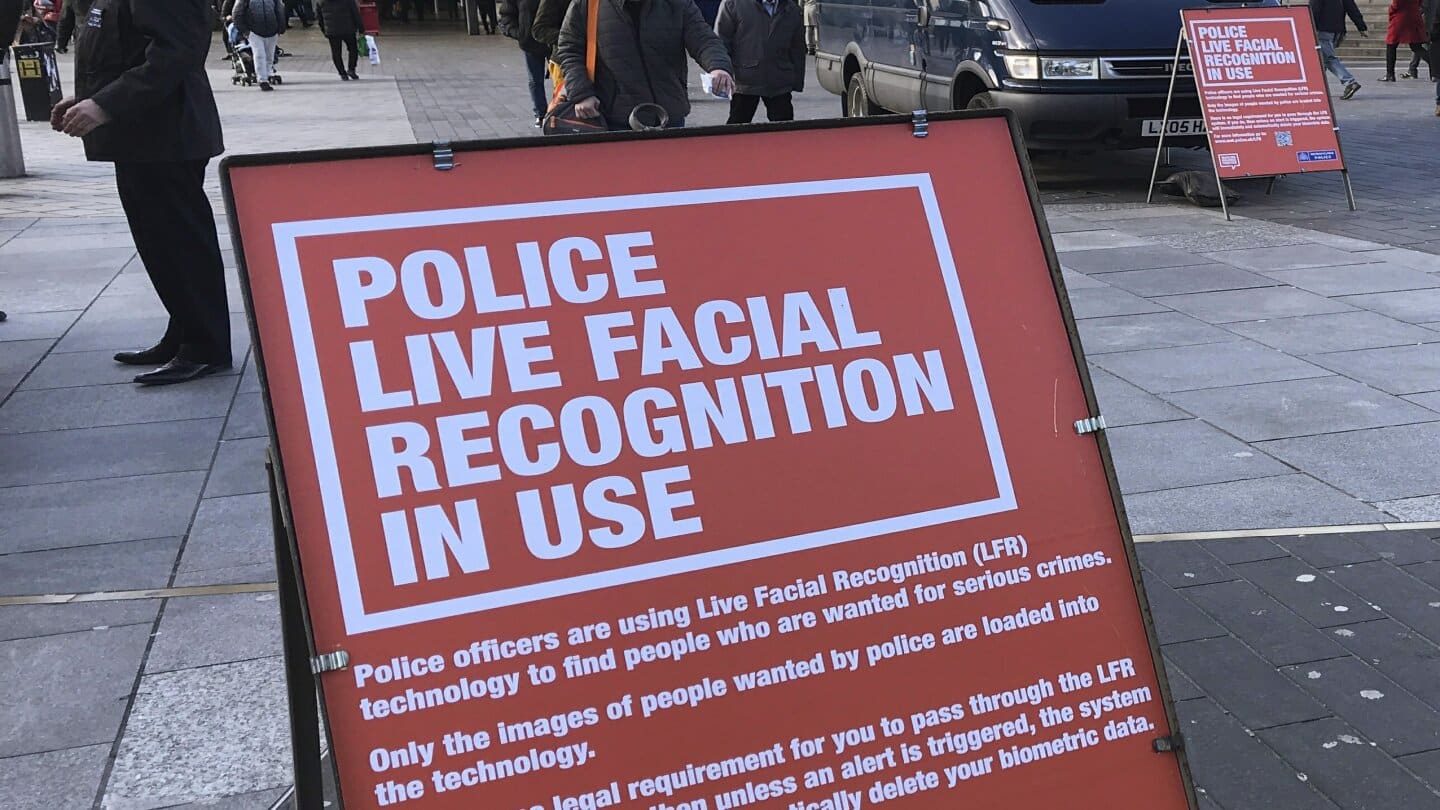
A new appeal from the head of the Metropolitan Police aims to lay out the benefits of live facial recognition, as the force looks to pursue digital transformation in law enforcement – and rolls out new static LFR cameras in central London.
A speech from Commissioner Sir Mark Rowley sets out “an ambitious next phase in the use of technology to tackle crime and stay ahead of offenders.” In doing so, it demonstrates the widening gap in how police and the public understand the benefits and risks of live facial recognition and other surveillance technologies.
Harkening back to the time when fingerprint systems were introduced into law enforcement, Rowlet says “fingerprints were controversial and caused the public to worry. That pattern continued when we introduced body worn video across the Met, it faced strong criticism. Yet today, it is essential to improving transparency, strengthening trust and protecting both officers and the public.”
“New technology often meets resistance, but when it is used responsibly and proves its worth, it becomes indispensable.”
Tech now driving crime, not just enabling it
Crowley believes that live FRT and other tech needs to be given that chance to prove its worth. He makes the familiar statement that criminals are now using technology to commit fraud at scale. “Criminals don’t have to play by any rules. They do not care about protecting your data, they actively seek to exploit it. They are not constrained by governance, or procurement rules.”
The concerns over live facial recognition in policing have been well documented in Biometric Update and elsewhere – as has the controversy . The Met is effectively asking to be let off the leash technologically, in order to keep pace with the acceleration of fraud. “While we are lagging behind, the private sector is using sophisticated data and technology to anticipate needs and protect customers in real time. The public expects this from the police.”
Crowley says procurement and legislation are too slow, and that innovation requires investment in technologies that have proven to be effective.
“It really works,” says the Commissioner of live facial recognition. “We have been using LFR vans successfully for several years, and have now tested static cameras on existing street infrastructure. These are only activated during deployments, when officers are present and engaging with the public.”
“Since 2024, LFR operations have contributed to more than 2,000 arrests. One in three registered sex offenders stopped were breaching their conditions, breaches we were not previously detecting.”
Moreover, he says, the initiative has public support, claiming that around 80 per cent of Londoners support its use.
“Whenever we talk about using data and technology in policing, it understandably raises important questions about civil liberties. I hear those concerns often. Questions about who can access data, and how it is used. About proportionality, accuracy, and bias. About whether we always have the right lawful basis. And about transparency.”
“But I also hear something else, very consistently, from Londoners themselves. They want us to use technology. They want us to be more effective. They are not fearful of us using data properly. They are frustrated when we do not.”
‘When used responsibly’ carries major weight in police appeal
This raises the question: which Londoners? The introduction of static FLR cameras to areas like the West End and Soho comes as the UK deals with questions about a “two-tiered” policing system, and faces increasing tensions over immigration.
The civil rights organization Liberty has published a response to the Commissioner’s plan, which it calls “very troubling.”
“Robust safeguards, oversight, and transparency on the use of facial recognition cameras should have been in place before they were ever introduced to our city centres and high streets,” says Akiko Hart, Liberty’s director. “To reach the level of fixed cameras across the capital before we even have a law in place is deeply concerning.”
Liberty wants police use of facial recognition technology put on pause until the government establishes a dedicated legal framework that includes “clear and consistent rules around how the police use facial recognition to ensure the rights of the public are protected at all times.”
The core conflict meets at the point of responsibility and trust. Police – as is their wont, globally – want more money and more capability to keep up with innovation and technological leverage on the criminal side. A key phrase in Commissioner Crowley’s speech about milestones in technological innovation is “when it is used responsibly.”
The fear is not that police will use live FRT to catch more criminals. Nor is it even the idea of surveillance that bothers people; as Professor Fraser Sampson, the former UK biometrics commissioner, has often pointed out in Biometric Update, the UK is already heavily wired with CCTV cameras equipped with video analytics.
The concern, then, is twofold: that the deployment of static live FRT cameras in central London marks a major contribution to an ever-expanding surveillance infrastructure that contains the possibility for damaging misuse – and that for all their promises, the police will, in their enthusiasm for the tech, inevitably misuse it. In the U.S., scope creep in police equipage has seen the increasing militarization of law enforcement. Its current political situation is also a good reminder that any surveillance system designed to catch criminals is easy to abuse if leaders take an authoritarian stance, simply by changing who qualifies as a criminal.
Related Posts
Article Topics
biometric identification | criminal ID | facial recognition | law enforcement | live facial recognition | London Metropolitan Police | video surveillance
Latest Biometrics News
A law that would permit the Irish police to use retrospective facial recognition “lacks legal clarity” and could create tension…
The U.S. Army has begun fielding a new multimodal biometric collection system designed to give military police and other forces…
Major UK banks and financial institutions, including Barclays, HSBC and Lloyds, are teaming up with industry group UK Finance to…
Kenya’s government is planning to link the country’s civil registry database with a CCTV network spanning six cities to enable…