
By Amber Bradley, Editor-in-Chief, TalkLPnews
I sat in the CORCA session at CLEAR in Las Vegas on Tuesday and had a slightly embarrassing realization. I’ve covered this bill for years and still had to work to follow exactly where it is today. If I’m fuzzy on it, a lot of you probably are too, so this week I’m keeping it simple.
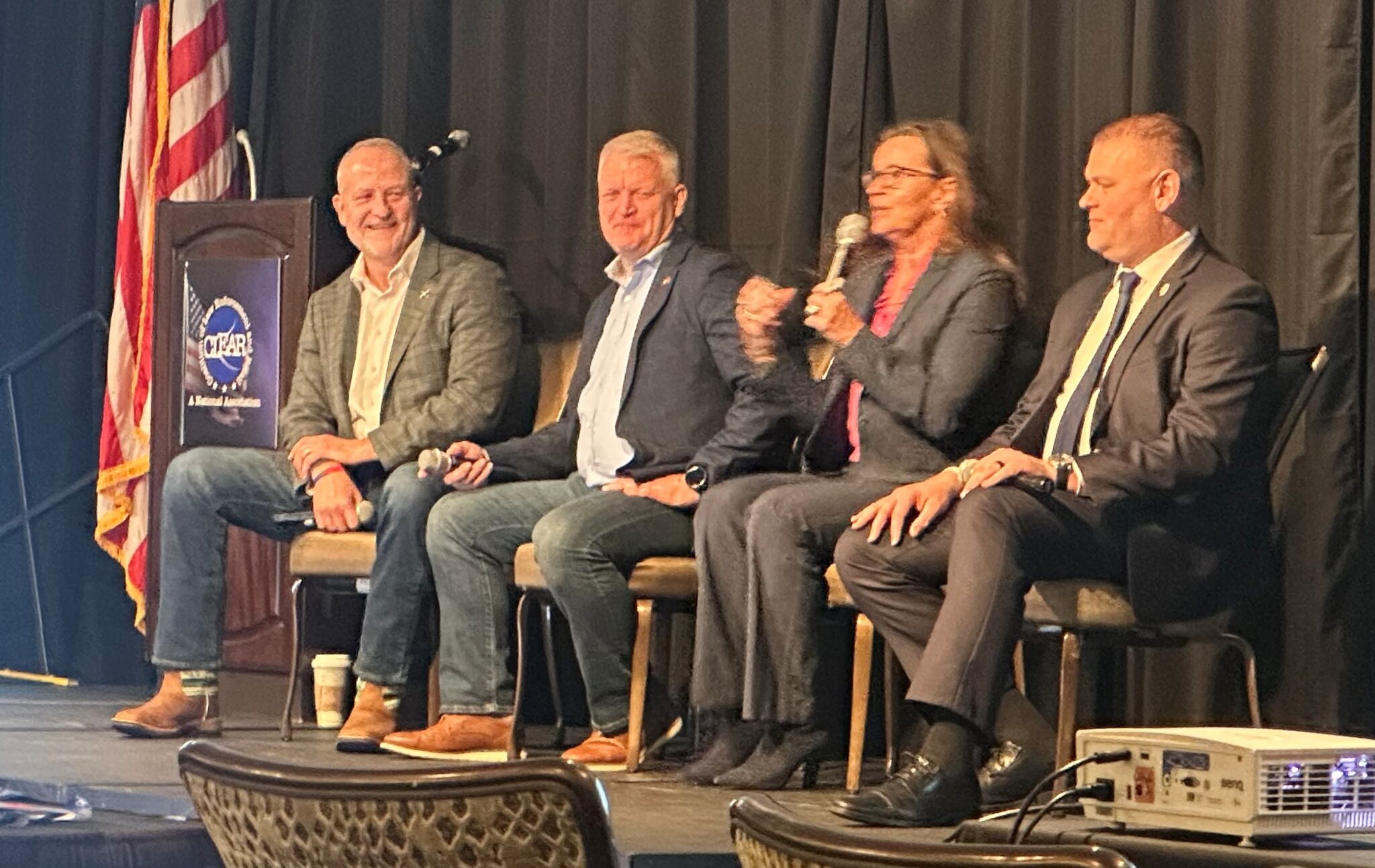
Big thanks to the panel for laying it out so clearly: Scott McBride, chief global asset protection officer and CSO at American Eagle Outfitters; Alysa Erichs, retired acting executive associate director of HSI; Aaron Vitale, supervisory special agent with the Pennsylvania Attorney General’s Office; and CLEAR board member Raul Aguilar. And thanks to CLEAR for putting federal, state, local and retail voices on one stage to talk about it honestly. What follows is my best plain-English version of what I heard.
What the bill does
CORCA is the Combating Organized Retail Crime Act. At the center of it is a national coordination center for organized retail crime and cargo theft, housed inside Homeland Security Investigations, where a crew hitting stores in Pittsburgh, Phoenix, Houston and Atlanta can finally be recognized as the same crew.
The bill also gives prosecutors more legal tools, expands money laundering statutes and allows forfeiture of illegal proceeds and assets. Thefts could be aggregated across jurisdictional lines, so a string of smaller hits in different counties gets charged as the operation it really is. It also creates regional task forces where local, state and federal law enforcement work cases side by side with retailers and other industry partners.
Pennsylvania is a good example of why this matters. The state has 67 counties and roughly 1,200 municipal police departments, 105 of them in Allegheny County alone. One case discussed on stage involved a suspect who crossed the southern border, learned a gift card scheme in Southern California and hit nearly every state in the continental U.S. in about six months. No local department is connecting all of that on its own.
How we got here
This is the third Congress to take a run at it. CORCA was introduced in 2022, late in the 117th Congress, and ran out of calendar. In the 118th, other business on the Hill kept the Judiciary Committee from ever reviewing it. In the 119th it finally moved through both Judiciary Committees, and on May 12 the House passed it 348 to 60.
Where it stands right now
That House vote felt like a finish line, but the bill’s path has changed since then. The Senate attached CORCA to the National Defense Authorization Act, the annual defense bill that Congress treats as must-pass. The House hasn’t added it to its version yet, and the two chambers have to agree on one final NDAA with CORCA in it. Congress pushed the NDAA past the midterms, so all of this is playing out in the lame-duck session, with only weeks left.
Two changes came with the new path. Cargo theft is now folded in, which brought trucking and logistics groups on board. And the bill now carries a three-year sunset, so the center expires unless it proves itself.
Support on the Hill is wide, and most offices understand the problem. It stalls when it turns political. Some members don’t want more laws or bigger government, and others are uneasy about housing the center inside DHS given current headlines. Outside groups like the ACLU and the Vera Institute have also raised concerns about how the bill defines organized retail crime and how retailer data would be handled. Expect to hear more of that as the vote gets closer.
What happens next
Next Tuesday, 20 to 30 retailers fly into Washington for somewhere between 36 and 45 meetings with House and Senate offices. The ask is specific: get CORCA into the House side of the NDAA so it survives into the final bill.
If it passes, the real work starts. The center needs budget, or HSI has to pull agents off other work to staff it. It needs a facility and the systems to handle the data. Every partner will sign MOUs and NDAs, and anyone who has waited on their own legal department knows how fast that goes. Retailers will need to bring cleaner, more standardized loss and incident data, and share more with each other than this industry ever has, knowing law enforcement often can’t share much back.
If it doesn’t pass, the work keeps going. HSI’s Homeland Security Task Forces are funded and can cover overtime for deputized state and local officers, and the National Cyber-Forensics and Training Alliance in Pittsburgh already runs a working public-private model.
My take
I’ve watched this bill die twice already, and both times it was the calendar that got it. That could happen again in the next few weeks to our collective sighs.
If it does pass, the three-year sunset is the detail I’d underline. Three years goes fast when the first one is spent on budgets, hiring, office space and lawyers. Whether this center survives will depend a lot on what retailers bring to it, so the data conversations inside your company probably shouldn’t wait for a vote. The final NDAA usually comes together in December, and I’ll let you know where CORCA lands.