
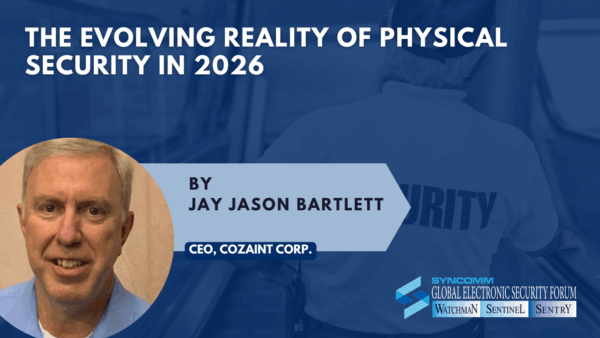
By: Jay Jason Bartlett, Cozaint Corp
In the security industry, our best people often wear many hats. Technicians are in the field every day meeting customers, solving problems, and earning trust. It’s natural to look at one of them and think, “This person could sell anything.”
You might be right. But making the leap from technical expert to full-time salesperson is more complex than it appears. Done well, it can elevate both your company and your customer experience. Done poorly, it can frustrate everyone involved and cost you a great technician.
So, should you move that standout tech into sales? Here’s a look at the upside, the risks, and how to make the transition successful.
Legacy Infrastructure And The Hidden Risk Of Standing Still
One of the most underestimated risks in physical security remains outdated infrastructure. Many organizations continue to rely on legacy access control systems, aging cameras, and closed platforms that were designed for a very different threat landscape. These systems often still function, which makes them easy to ignore, but functionality does not equal resilience.
In 2026, legacy infrastructure represents operational drag, security blind spots, and increased exposure to both physical and cyber threats. When systems cannot integrate, scale, or support modern analytics, security teams are forced to compensate with manual processes and fragmented workflows. Modernization is not about chasing the latest technology trend; it is about eliminating systemic risk created by systems that can no longer support the mission.
Artificial Intelligence As Both Force Multiplier And Responsibility
Artificial intelligence is reshaping physical security operations at a pace few anticipated. Video analytics, behavioral recognition, and automated event correlation are now viable tools for reducing noise and improving situational awareness. Used correctly, AI can dramatically enhance a security team’s effectiveness.
Used poorly, it can create false confidence, introduce bias, or overwhelm operators with continuous alerts. In 2026, the challenge is not whether to use AI, but how to implement it responsibly. Physical security managers must understand what their AI systems are doing, how decisions are being made, and where human judgment must remain central.
AI should augment human operators, not replace accountability. Education, transparency, and validation are critical if AI is to become a trusted component of physical security programs.
Cyber-Physical Convergence Is No Longer Optional
The line between cyber risk and physical risk has effectively disappeared. Access control systems, video platforms, monitoring infrastructure, and even security kiosks now operate on networks that are vulnerable to cyber exploitation. A cyber incident can directly translate into physical exposure, whether that means unlocked doors, disabled alarms, or compromised surveillance.
In 2026, physical security managers must treat cybersecurity as a core competency, not a parallel concern. This does not require becoming cybersecurity experts, but it does require active collaboration with IT, shared ownership of risk, and an understanding of how physical systems interact with digital infrastructure. Security leaders who fail to address cyber-physical convergence will find themselves protecting facilities with systems that can be undermined remotely.
Access Control And The Future Of Identity Assurance
Identity is rapidly becoming the foundation of physical security. Traditional badges and PINs are increasingly insufficient in environments where mobility, remote management, and insider risk are growing concerns. Modern access control solutions —mobile credentials, biometrics, and multi-factor authentication— offer stronger assurance and greater flexibility, but they also introduce new considerations around privacy, compliance, and user trust.
In 2026, access control decisions cannot be made in isolation. Physical security managers must balance security requirements with legal obligations and cultural acceptance. The goal is not simply to control doors, but to understand who is present, where they are authorized to be, and how access decisions support safety and accountability across the organization.
If you are now a follower of the ‘Zero Trust’ initiative, 2026 is your year to master and demand such a security strategy.
Operational Effectiveness Under Constant Pressure
Technology alone does not secure an organization. People do. Yet physical security teams are operating under sustained pressure from staffing shortages, budget constraints, and increasing operational complexity. Security operations centers are flooded with data, alarms, and video feeds that can overwhelm even experienced personnel if systems are not designed intelligently.
In 2026, operational effectiveness is one of the most critical risk factors. Physical security managers must focus on simplifying workflows, consolidating platforms, and investing in training that reflects the reality of modern systems. Retaining skilled operators and enabling them to make fast, informed decisions is just as important as deploying new technology.
Emerging Threat Patterns: Executive Risk And Organized Crime
Beyond internal challenges, external threat patterns continue to evolve. Threats and violence directed at executives, employees, and public-facing facilities are becoming more frequent and less predictable. Executive protection and workplace violence prevention are no longer niche disciplines — they are integral components of enterprise security.
At the same time, organized theft and property crime remain persistent threats, often leveraging insider knowledge, surveillance gaps, and predictable routines. In 2026, physical security managers must think holistically, integrating intelligence, deterrence, and response strategies rather than reacting incident by incident. Understanding threat motivation and capability is essential to designing effective countermeasures.
Looking Forward: Leadership, Not Just Protection
The physical security manager of 2026 is no longer defined solely by gates, guards, and cameras. The role demands strategic thinking, technical fluency, and the ability to communicate risk in terms executives understand. The organizations that succeed will be those that view physical security as an enabler of resilience rather than a cost center.
Addressing outdated infrastructure, governing AI responsibly, embracing cyber-physical convergence, strengthening identity assurance, and improving operational effectiveness are not optional initiatives. They are foundational requirements for protecting people, assets, and trust in an increasingly complex world.
Are you ready for 2026?
About Cozaint Corporation
Jay Jason Bartlett is the Managing Editor of Security.World and the CEO of Cozaint Corporation, a manufacturer of security surveillance solutions. Jay has over 40 years in the high-tech industry and over 15 years in physical security. Visit: https://cozaint.com
Internal links URLs
https://security.world
External links URLs
https://cozaint.com
Frequently Asked Questions (FAQs)
1. Why Is Legacy Physical Security Infrastructure A Risk In 2026?
Legacy systems often lack scalability, integration, and advanced analytics, creating blind spots and increasing exposure to both physical and cyber threats.
2. How Should Artificial Intelligence Be Used In Physical Security?
AI should enhance situational awareness and reduce noise, but must be implemented responsibly with transparency, validation, and human oversight.
3. What Does Cyber-Physical Convergence Mean For Security Managers?
It means physical systems are now directly affected by cyber risks, requiring collaboration with IT and shared responsibility for networked security platforms.
4. Why Is Identity Becoming Central To Physical Security?
Modern access control relies on stronger identity assurance through mobile credentials, biometrics, and multi-factor authentication to manage risk and accountability.
5. What Skills Will Physical Security Leaders Need In 2026?
Strategic thinking, technical fluency, risk communication, and the ability to manage AI, cyber convergence, and operational effectiveness.
Source: cozaint.com
https://security.world/the-evolving-reality-of-physical-security-in-2026/