
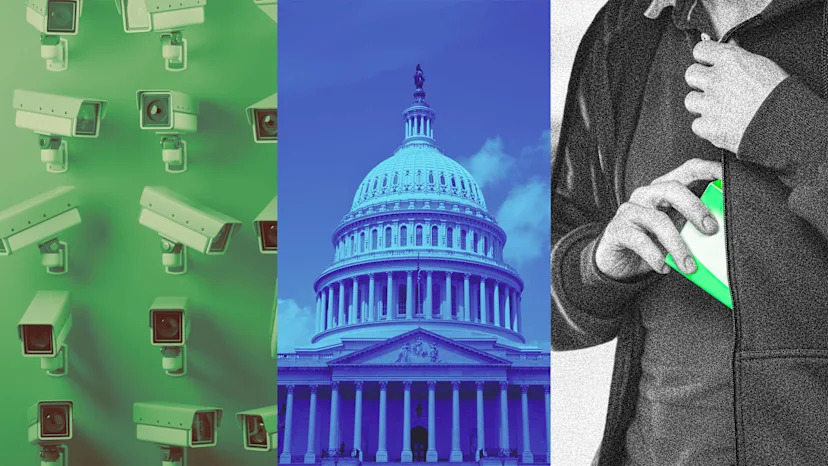
A growing coalition of retail founders, franchise operators, and mid-market CEOs are urging Congress to move beyond talking points and commit to meaningful legislation addressing retail crime and workplace violence. What was once considered a shrink problem has become an operational emergency: smash-and-grab rings are moving across state lines with near-military precision, flash-mob shoplifting has turned routine theft into mass disruption, and frontline employees are reporting spikes in threats, assaults, and weapons incidents. Leaders say the current framework — local charges, inconsistent prosecution, and outdated thresholds — is built for 1990s shoplifting, not today’s coordinated crews who can clear a store in 90 seconds and disappear with resale-ready inventory. The coalition’s central warning is blunt: without federal teeth, retailers can’t out-police, out-train, or out-tech organized theft at the rate it is escalating.
Industry observers point out that this is no longer just a crime wave — it’s a workforce crisis. Turnover in frontline retail roles is accelerating because associates no longer fear being reprimanded for scanning errors; they fear being assaulted for acknowledging them. Loss prevention teams report that deterrence through customer service, once a dependable playbook, is losing ground when offenders expect confrontation and arrive prepared for it. Even insurance carriers — typically slow to sound alarms — are flagging premium increases tied not to property loss, but to bodily injury liability, trauma claims, and security-related staffing shortages.
Executives are also pushing Congress to acknowledge the invisible piece of the crisis: the digital marketplace that enables it. Stolen goods are no longer fenced in parking lots but sold same-day through anonymous third-party storefronts that function as friction-free liquidation pipelines. Retailers argue that if e-commerce operators require identity verification, tax compliance, and traceability for sellers, the economics of organized theft collapse overnight. Until then, stores remain the front end of a criminal supply chain they can’t legally chase, tackle, or interrogate — but are constantly held accountable for failing to stop.
Many founders say the priority has shifted from profit protection to human protection. Police response times are lengthening, staff intervention policies prohibit physical engagement, and violent offenders face minimal consequence in high-traffic retail corridors. This leaves store managers in an impossible position: enforce standards and risk injury, or stand down and absorb the loss. Those sounding the alarm insist that legislation must address both physical security and economic recovery, but also establish a unified national standard for repeat offenders, interstate rings, and digital resale channels.
The tone across the industry is no longer cautious — it is fed-up realism. Retail leaders have tried signage, greeters, RFID, body-worn cameras, kiosks, receipt checks, and robotics. All have slowed the leak but haven’t sealed it. Their message to Congress is no longer about stopping theft — it is about preventing the normalization of fear inside American stores. For an economy that depends on frontline labor, the cost isn’t just disappearing merchandise; it is disappearing willingness to work where harm feels inevitable.
