
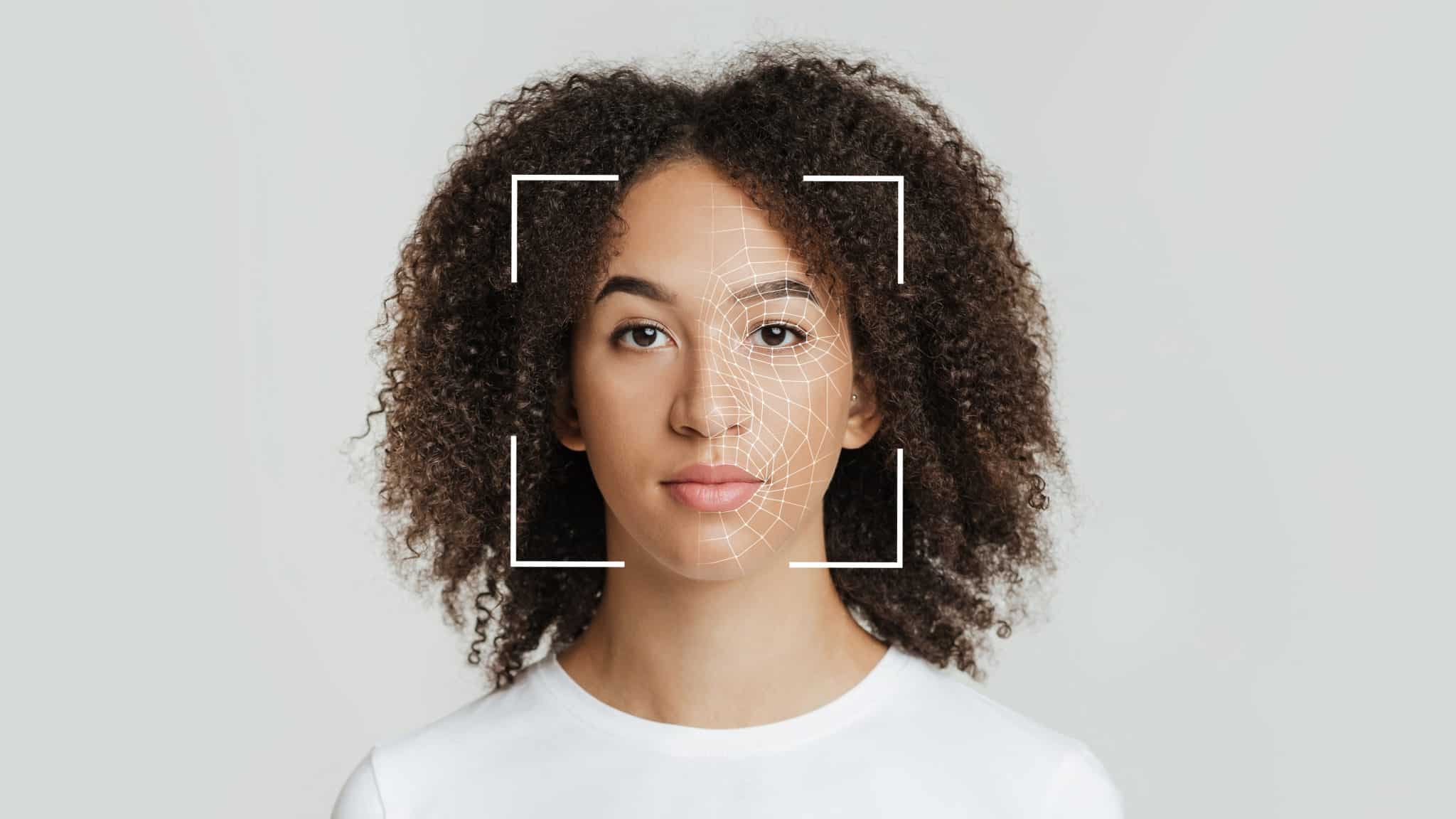
RealSense has unveiled a new camera for high-performance authentication with face biometrics and a pair of partners deploying it.
The new ID Pro introduces situational awareness to RealSense’s facial recognition cameras, shifting facial authentication toward “intent-aware access control,” the company says in the announcement.
It builds on the F450 RealSense launched in April, 2024, months before the company spun off from Intel as an independent startup. Compares to the F450, the ID Pro performs authentication about 70 percent faster, RealSense CMO Mike Nielsen told Biometric Update in an email. It increases the number of face templates that can be managed on-device tenfold, which makes it suitable for enterprise deployments. Keeping more templates on the device also reduces the compute footprint, and therefore the per-device cost, Nielsen notes.
Intent-based human biometrics are the biggest difference, he says. “We now have the ability to detect a person — not just a face — on the module. Meaning, we can classify body parts (legs, arms, hands, feet) and estimate pose in real time, without any additional external software. This includes which direction they are walking, how far away they are, and how quickly they are moving. This opens up an enormous opportunity for next-gen applications where you need to know the intent of a person beyond identifying their identity. And you still get the ability to authenticate faces on the same platform.”
Launch partners for the RealSense ID Pro include access control providers dormakaba and Ones Technology.
Intel will showcase the ID Pro at ISC West, on March 23 to 27 in Las Vegas, and its two biometric access control partners will demonstrate deployments at the show as well. Ones Technology will introduce its Vision 2 access control platform built with the ID Pro, while dormakaba is planning direct integrations of vision-based AI with its doors and entry systems for secure access.
Dormakaba made a strategic investment of an unspecified amount in RealSense in November, one of several recent deals involving the access control provider as it seeks greater biometric access control market penetration, particularly in the U.S.
“Integrating advanced vision-based biometrics into building infrastructure unlocks a new generation of secure, intelligent access,” says David Fuller, chief innovation officer of dormakaba, in the announcement. “Our collaboration with RealSense accelerates that future.”
“This will be a breakout year for biometrics in access control, and RealSense is uniquely positioned to lead it,” says Nadav Orbach, CEO of RealSense. “ID Pro gives our partners uncompromising performance, privacy and flexibility to deploy advanced biometric access control at scale, with no trade-offs.”
The ID Pro hardware and software solutions provides 99.77 percent accuracy, the announcement says, referring to the NIST FRTE 1:1 Verification results for an algorithm submitted by RealSense on December 1, 2025 as evidence of its performance. Authentication takes less than 250 milliseconds, and up to 10,000 face templates can be stored on a single device.
RealSense also says its biometric liveness detection software has passed a Level 2 Presentation Attack Detection (PAD) assessment by iBeta, based on the ISO/IEC 30107 standard, with zero attack classification errors. The company passed the compliance test on its first attempt, and plans to pursue a Level 3 standard compliance assessment in the near future.
The liveness detection software was developed in-house by RealSense. “We have several algorithms that look at 2D, 3D, and Near-IR to determine liveness and PAD attempts,” Nielsen says.
RealSense claims 50 percent year-over-year growth since it transitioned to an independent company, and says it will target the access control, commerce, loyalty, time and attendance and critical infrastructure markets.
Related Posts
Article Topics
access control | biometrics | dormakaba | face biometrics | facial authentication | facial recognition | Ones Technology | RealSense | RealSense ID
Latest Biometrics News
The Centers for Medicare & Medicaid Services (CMS) wants to modernize data for patients in the U.S. Speaking to Healthcare…
Police in France are reportedly photographing individuals with police-issued mobile devices and using facial recognition developed by the German company…
New research commissioned by Delinea looks at the tension between the pace of AI adoption, and how prepared organizations are…
For many months now, national ID cards have not been issued in Liberia, and reports suggest one of the reasons…