
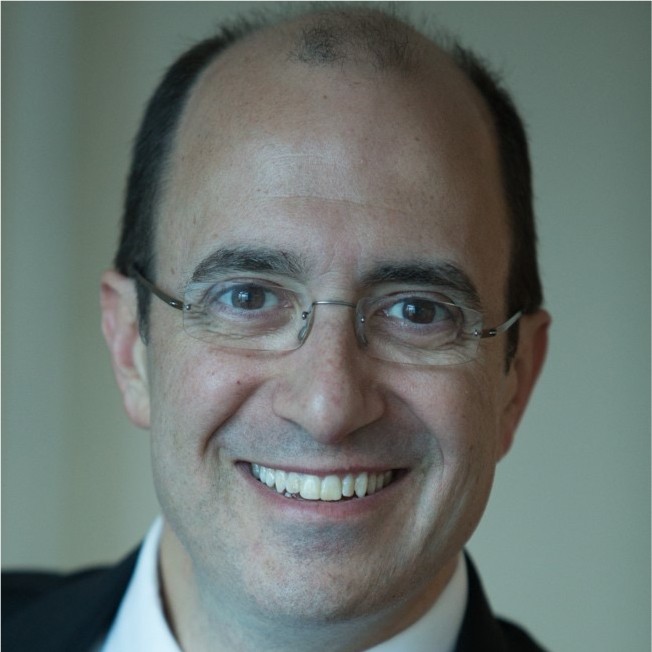
If you’d like to connect with John Franchi or use him as a resource, you can reach him directly at jf@thestationservices.com.
According to senior officials, Venezuelan President Maduro is quickly running out of options. While he has attempted to convince Trump not to attack the country by offering the U.S. fuel/oil, it has not been accepted. Rather, it appears to have placed Venezuela more sharply in the crosshairs of the U.S. President.
Furthermore, he has few, if any friends in the region – outside of Nicaragua, Cuba, and Bolivia. And as for his own military capabilities, analysts explain he has an old and incapable air force and a decrepit army that cannot withstand any U.S. military action.
- While he claims to have rallied 4 million militia members that are undergoing training to help defend Venezuela – even if this is close to reality – he does not have the supplies to support them.
As for Venezuela’s other friends, analysts highlight the Russians will not come to his aid as they cannot support themselves sufficiently. As for China, their bilateral relationship has been described as transactional – with China making money from Venezuela’s oil and the loans they provide to Caracas. For China, its interests are purely financial. While they could support Maduro enough to cause problems for the U.S. – analysts believe China’s interests at present, with the trade war cooling off, is to enhance their own economic and technological standing vis-à-vis the U.S.
Therefore, for Maduro, coming up with a Plan B is key. And analysts believe the only option he will have is to escape the country and travel to Cuba.
What is the impact of the strikes against the boats?
Analysts point out there are two impacts from these attacks.
The first is psychological, and the second is the actual counter-narcotics effort.
- Analysts note the impact of stopping the drugs from reaching their destinations is minimal. They point out the U.S. Coast Guard has been conducting such operations for decades. And while it all helps, in many ways it is only a drop in the bucket.
- The psychological impact, however, is far greater – with the crewmen of these boats not eager to undertake their missions – regardless of their pay.
What will happen next?
Analysts expect that because of U.S. military operations on the eastern coast of the Atlantic, the cartels will shift to the Pacific.
- They explained that this situation is not completely new and has always been like a pendulum. Specifically, the U.S. and its allies would focus on the Caribbean with the narcos then moving their operations to the Pacific. This leads the U.S. to shift to the Pacific, which precipitates the narcos to go back to the Caribbean.
As for the possibility of this expanding into a larger conflict, analysts are hopeful it will not, but given the movement of resources into the area, such an eventuality is highly likely.
As such, they expect limited military strikes targeting not only narco-sites around the country, but also the military/security apparatus – with the U.S. claiming those sites/leaders are working with the narco-groups.
Politically this conflict is seen by the Administration as low risk – as most Americans support such activities which are characterized as undercutting the fentanyl/narcotics trade, as well as stemming the flow of migrants. While analysts point out that neither of these issues are particularly relevant vis-à-vis Venezuela, there are enough smoking guns in/around Caracas to ensure the necessary political/popular support in the U.S.
Furthermore, such action sends a loud message throughout the region that the U.S. is keen to reassert its control over Latin/South America – in line with the Monroe Doctrine.
- Analysts note that China, Russia and Iran have been active throughout the region over the past 20 years, establishing ties with local leaders, sending operatives to support security/criminal/military leaders, as well as overtly positioning military resources in the region – most notably in Cuba.
Therefore, it is believed this will likely be the first step of many in which the U.S. attempts to reassert its dominant role in the region.
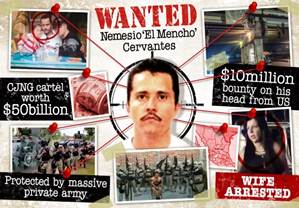

Venezuela or Mexico: Which is the main narco threat?: To date, the U.S. has destroyed 20 speed boats off the coast of Venezuela as part of its anti-drug campaign, redeployed the USS Gerald Ford aircraft carrier group to the eastern Atlantic, and been posturing as if it will be launching attacks inland at targets being described as narco-terrorists. However, for many analysts, the rationale for this growing conflict does not align with the realities they are tracking.
- Senior officials explained that if the boats destroyed to date contain contraband, it was likely marijuana or cocaine.
- Many of the small boats plying the Caribbean are believed to be supplying the European market, where cocaine brings double or triple U.S. prices.
- While hardly benign, cocaine is not considered a major overdose danger, and it has fallen out of fashion among many American drug users, who have increasingly turned to far riskier substances — particularly fentanyl and the synthetic stimulant methamphetamine.
- Both are manufactured mostly in Mexico in cartel “superlabs” with precursor chemicals imported from China and India.
Despite objections from Congress, legal scholars and foreign governments, President Trump has announced he may soon authorize strikes inside Venezuela – although recently he backed away from these threats.
Regardless, it appears to analysts that Trump’s agenda is more about forcing President Nicolas Maduro out of office than stopping drugs.
- The U.S. government’s most authoritative annual intelligence assessments – the DEA’s National Drug Threat Assessment and the State Department’s International Narcotics Control Strategy Report – characterize Venezuela as a transshipment hub.
The problem is in Mexico
Analysts explain that the world’s richest and most powerful drug lords are Mexican citizens, with well-armed private armies and bases of operations nestled deep in the Mexican countryside.
To date, while Trump has suggested the U.S. could launch drone attacks and/or have American boots on the ground in Mexico, Mexican President Claudia Sheinbaum has opposed this idea. And while her statements have been unequivocal, she also understands the new reality in Washington DC. As such, she has been taking preemptive steps to address U.S./Trump’s anti-drug goals. This includes ramping up operations and proactively responding to long-time calls by the U.S. to extradite large numbers of narco-traffickers.
This is not to say the U.S. will not proceed regardless of her actions – but heretofore her tact appears to be working. That said, recent statements by Secretary of State Rubio during a visit to Ecuador in September detailed the U.S. intent to continue to target/kill suspected traffickers without their homelands’ consent if those countries did not participate in Trump’s new war on drugs by mounting their own attacks on cartels.
Who are the main players? – CJNG and Sinaloa
In Mexico there are many players, but the two main groups are the Cartel de Jalisco Nueva Generacion (CJNG) and the Sinaloa Cartel.
At the present time CJNG maintains the upper hand.
And Mexican security forces have repeatedly tried and failed to arrest El Mencho, real name Nemesio Rubén Oseguera Cervantes. Oseguera is the 59-year-old founder/leader of CJNG.
Analysts note CJNG is the wealthiest criminal group in the world – even more than the IRGC in Iran – and it is the biggest terrorist organization in the Western Hemisphere.
- CJNG, which emerged from the western state of Michoacán is now a multinational billion-dollar business with a presence in nearly every state in the U.S. and at least 40 countries.
- In the U.S. they are involved in gun smuggling, drugs and other businesses – some legitimate.
- Analysts point out they maintain influence – and in some cases have penetrated law enforcement agencies – all along the U.S./Mexican border.
Behind CJNG is the fragmented but still powerful Sinaloa cartel.
Sinaloa cartel leaders Ivan Archivaldo Guzmán Salazar and Jesus Alfredo Guzmán Salazar – known as the Chapitos – are sons of the infamous cartel founder Joaquín “El Chapo” Guzmán, who is now serving time in a U.S. prison.
- They are credited with creating the fentanyl craze by promoting it in their distribution systems, alongside cocaine, meth and marijuana.
What the fight would look like
While the CJNG and the Sinaloa Cartel at present are trying to avoid a fight with the U.S., should it happen, analysts believe the U.S. can expect significant resistance financed by very deep pockets and long engrained infrastructures.
- CJNG territory covers thousands of square miles in the western Mexican state of Michoacán and in neighboring Jalisco state, which is a rugged countryside dotted with ranches and laced with hidden trails, caves and mines.
- The Chapitos are similarly well-protected in Sinaloa state.
Analysts warn that a joint Mexican-U.S. special operations assault would raise the specter of possible “blue-on-blue” or “green-on-green” firefights with corrupt elements of Mexico’s security forces defending the narco-leaders.
- Analysts note these groups are akin to an insurgency that use terrorist tactics against their own people to keep them quiet and loyal.
- In addition, these groups are fully integrated across all of Mexican society – something that will likely take generations to fully root out.
And while the Mexican military has some elite world-class units there are not many, supported by a limited infrastructure used to track/target the narco-groups across a vast and generally lawless country.
For their part CJNG is highly militarized and formidable.
- According to current and former U.S. officials, Mencho roams around his domain in four-wheel-drive convoys or small aircraft, always surrounded by large numbers of heavily armed paramilitary fighters who wear insignia identifying them as FEM – Fuerzas Especiales Mencho or Grupo X – which specialize in fighting rival cartels.
- Like Usama Bin Ladin, he avoids using phones and instead uses messengers.
- He moves often, which makes it very difficult to track him.
- In fact, Mencho and the other narco-leaders have successfully avoided SEMAR’s (Mexico’s navy/marines special operations) drones for years.
- CJNG has its own drone unit, called the Operadores Droneros, and they employ a vast network of security cameras to detect the presence of outsiders.
Furthermore, analysts explain CJNG has extensive counter-surveillance capabilities.
- Cartel security officers, known as sicarios (literally, assassins) issue mobile phones with heavily encrypted voice-over-internet and radio-over-internet apps to hundreds of human lookouts, called halcones (meaning hawks/spies), who are under orders to report any strangers showing up in cartel territory
Despite Sheinbaum’s determination, analysts note her efforts to engage the cartels has met with limited success.
- Last March, Mexican soldiers and national guardsmen driving in a convoy near CJNG territory on the border between Jalisco and Michoacán states were ambushed, and six security force officers and three CJNG hitmen were killed.
- Three days later, security forces in the area were again ambushed, two of their number killed and the rest forced to retreat.
- Separately, David Cristobal Barraza Sainz, known as Commander “Nitro” within the Sinaloa State Police, was shot and killed after an attack in Sinaloa, Mexico on 15 July 2025.
What could cause the U.S. to enter the fray?
Senior officials believe if the Mexican army fails to mount more operations against CJNG and other cartel strongholds, the Trump team will seriously consider unilateral operations – despite Sheinbaum’s vocal objections.
However, as a practical matter, a raid or two would not solve the problem. Mexico’s cartels, like major corporations, could survive the loss of a few key executives.
Official note any actions would need to be widespread and sustained. Also, they would require a great deal of political support from the U.S. for Sheinbaum and her government as it is expected that the cartels would react and the Mexican opposition and street would oppose the U.S. military engaging in operations on Mexican soil.
That said, officials believe the current situation will likely continue for the near/mid term as the U.S. is more focused on Maduro and Venezuela than Mexico. And the Mexican cartels have little reason to do anything to provoke Trump or the U.S. military.
A global syndicate of evil
But in this context, it is important to understand the wide and growing reach of the CJNG. It has built out a complicated and durable executive structure in recent years as it has gone global and diversified.
- Mencho is expanding around the world, as he and his allies have recognized the potential threat to their business enterprise with the increased attention by the Trump Administration.
- They are adjusting strategies, realigning, identifying new partnerships, being strategic in some of their global routes and capitalizing on the market in different areas of the world.
- On the ground, Mencho has cemented international alliances with organized crime syndicates, from motorcycle gangs in the U.S to the Japanese Yakuza.
When the profits to be made from human trafficking dwindled due to the Trump Administration’s crackdown on the border, CJNG developed other robust cash streams, including stealing fuel from the Mexican oil company PEMEX and other energy outlets, extorting avocado farmers, and even smuggling mercury, a pricey/poisonous by-product of goldmining.
Senior officials have also noted CJNG is the first international criminal conglomerate, maintaining criminal control of legal commodities and services – to include oil, gasoline, minerals, chemicals, timber, government funding, infrastructure and resources, armed forces, weapons, politics, police services, judicial systems, and access to international financial services.
U.S. presence by these groups
What is most alarming to senior law enforcement leaders is the significant CJNG and Sinaloa cartel presence in the U.S.
During the summer of 2025 a DEA team raided a warehouse in downtown Los Angeles, a few blocks from the agency’s Southern California office. Hidden inside, agents discovered a luxurious CJNG safe house with places for cartel operatives to lounge, a pool table and presiding over it all, a floor-to-ceiling mural of El Mencho depicted in a bulletproof vest emblazoned with CJNG’s insignia and Mencho’s personal symbol, a bloody cockfight.
Therefore, as analysts monitor the situation in Venezuela – while they see government ties to drug production, it is not to the level that exists via the cartels in Mexico. And while these Mexico groups will eventually come under threat of U.S. direct action, they believe it unlikely in the near term.

Recent developments in China/U.S. relations: For analysts, October 2025 was one for the books for U.S.-Chinese relations.
- The month started with a sharp escalation in U.S.-China trade tensions.
- Then came feverish negotiations to stabilize the relationship.
- Later in the month, China’s leaders took a quick break from the trade drama for the Party Central Committee’s Fourth Plenum.
- This week, they published their Proposals for the upcoming 15th Five-Year Plan (FYP) (2026-2030), which will shape China’s governance and economic ambitions over the next five years.
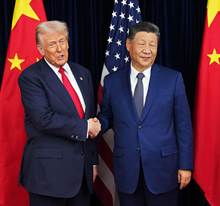
- Then President Xi and President Trump met in person for the first time in six years – agreeing on a framework for sustainable trade de-escalation.
While all of these developments are considered significant, analysts are focusing on one aspect of the 15th FYP Proposals that has been largely overlooked. It was stated as follows:
- “The ‘15th Five-Year Plan’ period will play an important role in inheriting the past and ushering in the future in the process of basically achieving socialist modernization.”
Analysts view this as pivotal for realizing Xi Jinping’s overarching program to fundamentally shift China’s economy toward a new growth model – which was detailed recently in the Update – and to make decisive progress toward achieving technological self-sufficiency.
Indeed, the proposals are suffused with an unusual sense of urgency across a range of economic and technological policy goals. Analysts note this is not something we typically see in China’s Five-Year Plans.
- Normally, these plans read like a laundry list of top-line policy agendas – loosely grouped under catch-all headings like “improving people’s livelihoods” and “maintaining a moderate speed of economic growth.”
By contrast, these latest proposals follow a much more coherent logic:
- Virtually every policy agenda feeds neatly into the overarching goals of boosting productivity in the industrial sector and achieving technological breakthroughs across a range of industrial applications.
- What is more, the proposals adopt especially strong language regarding the need to strengthen China’s tech self-sufficiency and develop independent and controllable innovation and technologies.
Analysts assess this as a clear sign that Beijing sees the next five years as a make-or-break window for achieving technological independence – both as a route to economic upgrading and, implicitly, a way to relieve U.S.-led pressure on China’s tech sector.
Most notably, the proposals pledge to adopt “extraordinary measures” to strengthen China’s innovation capabilities and strategic technology research. And while it is unclear what those “extraordinary measures” will involve, the language points to a greatly intensified drive to make breakthroughs in areas where foreign tech currently has China in a chokehold.
The proposals further underscore that China will pursue “decisive” breakthroughs in key areas like:
- Integrated circuits
- Industrial machinery
- High-end instruments
- Basic software
- Advanced materials
- Biomanufacturing
And while China’s policymakers often talk about achieving decisive policy “victories” or becoming a “superpower” in any given area, this type of language was more prevalent, consistent, and urgent in the proposals than in most other policy documents.
The message from China’s leaders is clear to analysts – there is only a narrow window to secure breakthroughs in key technologies, so the entire policy apparatus must be laser-focused on making them happen.
As for where U.S.-China trade tensions come back into play:
- By revving up the sense of urgency to achieve key milestones in the quest for technological self-sufficiency, China’s leaders are looking to better insulate the country against what they see as inevitable future efforts by the U.S. and others to thwart China’s technological advancement.
- If China can reduce, or even eliminate, its reliance on Western firms for key chokepoint technologies – particularly in the six areas listed above – it will be much less exposed to tech restrictions the next time around.
Analysts stress Xi appears confident China can break through U.S. chokeholds on key semiconductor technologies much more quickly than the U.S. can replace its dependence on China for critical minerals and rare earths.
From analysts’ perspective, this is quite possible as China appears to be steadily closing the gap in producing leading-edge chips, while the U.S. and its allies are only just beginning to really reckon with the gap they face on rare earths.
Overall, analysts opine that China’s leaders assess their key points of leverage in the trade fight will remain stronger – and last longer – than the U.S.’ critical points of leverage.
- In military speak, they believe they have – and can maintain – “escalation dominance” in a trade war, if things go south again.
And it is hard to disagree given how the U.S. has repeatedly folded in the face of rare earths disruptions from China over the past few months.
And that is the key reason that getting a one-year extension of the trade ceasefire with Trump in South Korea was so important for China.
- Chinese officials believe that a year from now they will be much closer to producing leading-edge chips than the U.S. will be to establishing a viable alternative rare earth supply chain.
And five years from now – as outlined in the 15th FYP Proposals – they plan to have closed the chips gap completely.