

The Russian forces stationed at Qamishli airport in Hasakah Governorate have officially transferred the first batch of “mercenary fighters” they recruited weeks ago into special combat groups to be deployed in battles against Ukrainian forces.
The majority of the fighters are remnants of the fallen Assad regime and the Revolutionary Guard, some of whom are fighters who sought refuge with the U.S. aligned Kurdish Syrian Defense Forces (SDF) after the regime’s collapse.
Others are alleged mercenaries coming from the coast, and another group came from Aleppo as well.
The contract includes a salary of approximately $1000, along with promises of obtaining residency in Russia and not returning to Syria.
Analysts assess this outreach and assistance is not only meant to reinforce current troop strength on the ground, but also to illustrate the breadth of Russian support as well as Moscow’s intent to continue to prosecute the war by any means necessary.
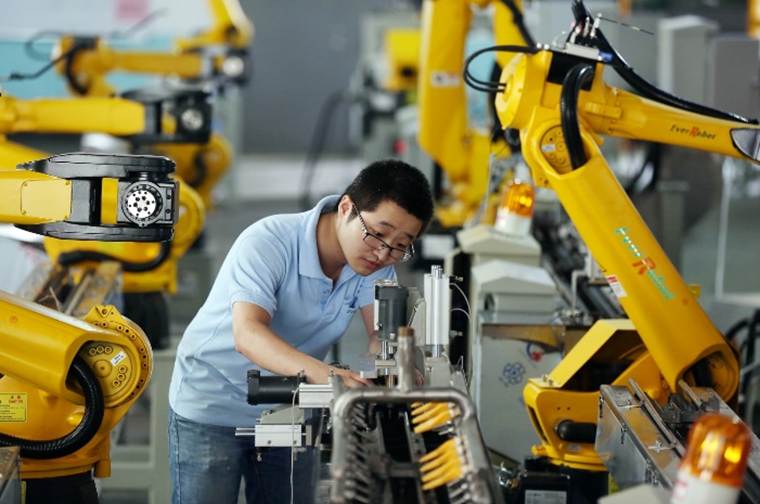

China driving its robotics sector to address domestic and international issues: In 2011, China began prioritizing robotics as a strategic sector, officially declaring it a national priority. Since then, increasingly aggressive goals have been set, and investment in robotics has surged – something analysts assess as being both a tactical step to help support all aspects of China’s economy, but also a strategic move to ensure it is postured to supplant the U.S. and other regional competitors in the coming period in the high-tech sector.
In fact, analysts and policy makers are growing concerned as China’s investments may prove difficult for the U.S. and others to keep pace with.
With the 2025 release of the new Five-Year Plan for Robot Industry Development, China telegraphed its intention to aggressively continue advancing its efforts. And while many try to read between the lines with regard to China’s intentions, senior analysts point out that China typically is clear – not only making its intentions known through its actions, but also by publishing them in Five-Year Plans and other strategic documents.
Background on Robotics Industry in China
China is already the world’s largest robotics market, both in annual sales and in the operational stock of robots.
- In 2023, Chinese factories installed 276,000+ new industrial robots, accounting for 51% of global demand.
- This brought the total operational stock in China’s manufacturing to 1.75 million units.
- 47% of these robots are from Chinese manufacturers, a jump from 28% in previous years, with remaining installations met by foreign firms like Japan’s Fanuc, Yaskawa, Switzerland’s ABB, and Germany’s KUKA – all of which have active operations in China.
Analysts note Chinese leaders and planners’ intent is to control the global supply of robots, from finished products to all core components. As such, in light of ongoing economic issues, analysts assess China expects robots to be their new engine of economic growth – working to overcome the limits to growth for the traditional industries China relied upon to propel its economy.
Analysts note China’s robotic plans cover multiple sectors, including manufacturing, healthcare, agriculture, logistics and the military. And the robots they currently produce cost a fraction of robots produced in the west – as much as 20% less.
And while China faces many challenges – i.e. it still imports many precision components from the West – this is expected to decrease.
Plans for massive investment – i.e. China recently announced a $128 billion venture fund for robotics – will support these plans for self-sufficiency.
How is China moving forward?
As with AI and analytics, China has regional hubs designated for focused investments in robotics. They include:
- Shenzhen
- Designated a national robotics innovation hub, emphasized in multiple Five-Year Plans.
- It hosts some of China’s most advanced robotics firms (DJI, UBTECH, Pudu Robotics) and is the center of the Guangdong–Hong Kong–Macao Greater Bay Area innovation strategy, which includes AI, robotics, and smart manufacturing.
- Shenzhen has established dedicated zones like the Shenzhen Robotics Industrial Park in Bao’an District to advance development and production.
- Beijing
- Beijing has been designated a core national AI and robotics development center.
- It hosts major State-Owned Enterprises (AVIC, CASC) and startups (Geek+, Tinavi), and is home to China’s largest clusters of defense and aerospace robotics research.
- The city’s Zhongguancun Science Park is specifically tasked with incubating robotics and AI companies.
- Shanghai
- Shanghai is listed in the National Robotics Development Plan (2021–2025) as one of China’s premier cities for robotics R&D and manufacturing.
- It hosts leading firms like Fourier Intelligence, MicroPort, MedBot, and Keenon Robotics.
- The Shanghai Robot Industrial Park in Jiading District is a nationally recognized hub, and the city hosts China International Robot Show (CIROS) annually.
- Guangzhou
- Guangzhou is promoted under national and provincial plans as a robotics manufacturing and application center.
- It hosts XAG – a leading agricultural tech firm that specializes in smart solutions to include robotics.
- City leaders are developing the Guangzhou International Robot Industrial Park, focused on agricultural, service, and industrial robots.
- Wuhan
- Wuhan, through its links to China Shipbuilding Industry Corporation (CSIC), is heavily involved in marine robotics, underwater drones, and unmanned naval systems.
- It is developing robotics tied to autonomous shipping, underwater vehicles, and maritime defense as part of the Yangtze River Economic Belt strategy.
- Shenyang
- Shenyang, home to SIASUN Robot and Automation Company – one of China’s largest manufacturers – is historically one of China’s first designated national robotics bases.
- The Shenyang Robotics Industrial Park is part of the “Made in China 2025” effort to strengthen advanced manufacturing.
- Shenyang focuses on industrial robots, including welding, assembly, and logistics automation systems.
- Hangzhou
- Hangzhou has strong provincial support as a robotics and AI innovation hub within Zhejiang Province’s industrial upgrading strategy.
- Unitree Robotics – a consumer-focused robotics firm – benefits from Hangzhou’s positioning as a center for “AI + Robotics” fusion applications.
- Xi’an
- Xi’an is prioritized as a defense and aerospace robotics R&D base, hosting China Aerospace Science and Industry Corporation operations and Zhong Tian Guide Control Technology (ZT Guide).
- It is part of national “Western Development” policies that emphasize high-tech industries, including unmanned systems and autonomous vehicles.
- Nanjing
- Nanjing is part of the Yangtze River Delta Robotics Development Zone, with Estun Automation leading local industrial robotics manufacturing.
- Suzhou
- Home to Ecovacs – is integrated into Shanghai’s broader robotics corridor, focused more on service robots and home automation technologies.
- Harbin
- Harbin (through HIT Robot Group) is officially recognized for military robotics research and autonomous systems as part of China’s northern technology base.
- Wuhu
- Wuhu, with EFFORT Intelligent Equipment Company, is an important regional player within Anhui Province’s robotics and intelligent equipment strategic initiative.
Analysts point out this investment by China is as much about positioning itself as the world’s leader in the field as it is about sustaining growth and dealing with impending demographic realities.
For China, an aging population that will require support and a young generation not interested/willing to either provide this support or to replace the current generation in the factories are major motivators for quick results in the development and deployment of robots.
At present, while China is not the leading country with regard to the deployment of robotics, it is quickly ascending the list – current number three behind Japan and South Korea, with Germany and the U.S. also highly advanced. That said, analysts expect China to be dominant within the next year or two – if not sooner given its level of investment and the political support from its leadership.
For the U.S., the challenges posed by China’s efforts are significant in that Beijing could leverage this expertise to not only drive its economic growth and strength beyond the U.S., but it could become the de facto technology moving forward – helping it to realign power centers and alliances as industries become more reliant on robotic technology supported by AI and other related sectors.
Analysts do not believe there is an easy or quick answer for this as China has a significant lead on the U.S. tech sector. However, they believe the U.S. lead in software, AI and semiconductors does provide an opening that can be exploited.
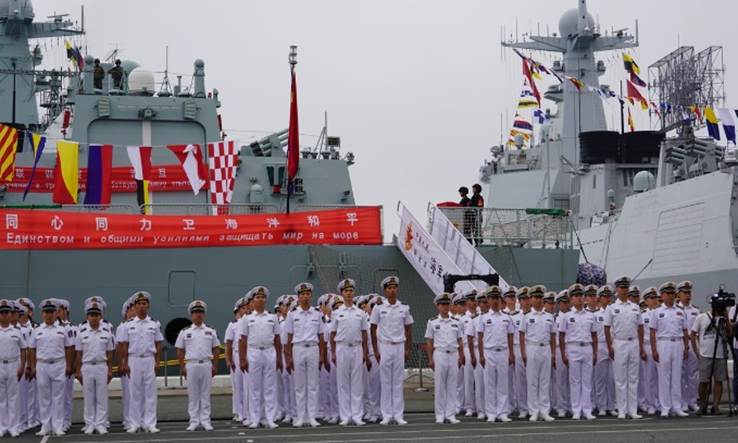

Delving deeper to understand Chinese posturing around Taiwan: The possibility of China invading Taiwan is an issue regularly addressed and discussed by policy makers, intelligence agencies, and a host of unofficial forum. While China’s desire to absorb Taiwan is understood and not in doubt, there are a host of facets to this issue which need to be understood – particularly what China’s real intention is moving forward.
At presents, analysts still are of the mind that China is not planning to invade Taiwan in the near or mid-terms. While China is regularly conducting military operations near Taiwan – sometime in response to Western military exercises and sometime unilaterally – it is believed these actions are used to excite reaction by the West, as well as to divert attention from other activities taking place in the Pacific Basin (an area China sees as its sphere of influence). Relatedly, China wants Taiwan and others to be more concerned with the specter of a military attack then low-key asymmetrical efforts to influence and steer Taiwan toward China.
For those analysts closely watching events, they assess China’s aim is to influence Taiwan and the region into accepting Chinese rule. This is not to say China would not invade Taiwan or undertake some type of military operations to gain control. But at this point, due to China’s goal of stabilizing its economic growth, and quieting the current tensions between it and the West, active military action does not appear to be a real or practical option.
The Shaping and Positioning Period
However, what is happening is something analysts have begun to focus on with renewed vigor. They view the current time as the shaping and positioning period. And for analysts this is more dangerous and impactful than many have thought.
As mentioned earlier, for analysts, they believe policymakers and many following this issue have lost sight of how nuanced and multi-dimensional it has become. For many the narrative around Taiwan is solely focused on when and how China will attack. And many have made a contest out of trying to guess when such an attack could occur.
Recently, dates have ranged from 2026 until 2028. However, what analysts are attempting to highlight is the fact that there has already been a steady stream of attacks by China against Taiwan through its shaping and positioning operations.
The manner in which this has manifest itself is important to understand, for it not only provides insights into how the “battlefield” has been prepared to date, but also how China views warfare moving forward.
Such an understanding is key for analysts to examine the true nature of China’s intent for Taiwan, as well as for other Chinese adversaries – which include the U.S. and its Western allies.
How has China played this out recently?
The following is a breakdown of actions taken over the past years by China against Taiwan, as well as assessments on what is likely to come:
- 2024 and previous years
- China seeds and amplifies pro-Russian narratives.
- China supports Russia’s war effort in Ukraine, viewing it as a counter to the U.S. and the West.
- China activates agents to the West via universities and H-1B visas to gain insights and influence in key sectors – some of which are not being tracked by U.S. security services.
- China pressures media and commercial interests to adopt more pro-China positions. This also extends to universities and corporations in which China is able to seed its agents.
- It is important to note that China’s modus operandi for such operations is not activist. Rather, it has a long-term perspective for dealing with such efforts.
- China allows its citizens to get in place before they are activated or approached.
- These latter stages are usually done in a way that involves the Chinese government pressuring its citizens abroad – leveraging their families to encourage support.
- China conducts provocative military “training” operations to intimidate and test Western responses.
- China spies on both Russia and Ukraine to improve its warfighting capability – as well as to identify needs both have that China can leverage by providing financial or material support.
- 2025
- China is expected by analysts to continue all of the aforementioned efforts.
- China will look to seed and amplify pro-Chinese messages through influencers—under the guise of “America First” or “anti-war” rhetoric.
- China will continue its effort to assemble a response program/package inside the U.S. and allied countries should relations become hostile.
- Similar to Ukraine’s operations inside Russia, they use unwitting commercial actors with access to critical infrastructure and strategic assets.
- As Ukraine’s Operation Spiderweb showed, an adversary does not need physical access to launch an effective attack.
- Targets are not limited to the U.S., but also include the Philippines, Japan, South Korea, and Australia.
- China has been focused on understanding and exploiting the permeability of the U.S. border for years. This is expected to continue – and possibly increase – given renewed efforts by the U.S. Administration to tighten controls. Analysts believe China continues to want to have a full understanding of potential weak areas that can be exploited should relations with the U.S. become actively hostile.
- China will continue to seed and amplify anti-American propaganda in Canada, Japan, Korea, and the Philippines—focusing especially on Japan and the Philippines given China’s intent to enhance its positioning in the Western Pacific.
- 2026
- Analysts believe it likely China would look to exploit internal U.S. issues—border policy, race, LGBTQ rights, etc.—to divide Americans as much as possible.
- In this regard, China is expected to continue to seed and amplify radical voices using troll farms, bot farms, and AI tools to create audience capture, nudging moderate influencers toward more extreme positions.
- 2027
- Analysts believe China will likely mimic Russia’s 2016 tactics to sow chaos in the U.S. elections. This could also include mimicking Putin’s nuclear saber rattling.
- Pro-China voices would be amplified.
- Those advocating for military preparedness would be labeled “xenophobes” by the Left and “not America First” by the Right, both accusing the West of instigating/starting WWIII and nuclear armageddon.
- In Japan, China would likely stoke renewed debate over U.S. bases in Okinawa, seeding false stories of abuse and misconduct online, which eventually surface in mainstream discourse.
- Similar tactics would be applied to all U.S. allies, turning support for Taiwan’s defense into a polarizing, monetizable political issue. Because it is a “money maker” mainstream.
- 2027–2028
- Depending on the U.S. election outcome, China may initiate a full-scale attack on Taiwan:
- If Trump is in office and a strong successor is likely, they may strike before the end of his term.
- If a weaker candidate wins, they may strike early in the new Administration, exploiting the transition period.
- Depending on the U.S. election outcome, China may initiate a full-scale attack on Taiwan:
The ultimate goal of these efforts is not engaging in a hot war that could draw in the U.S. and undermine China’s economy. Rather, as mentioned earlier, China would like to take Taiwan without ever actually having to fire a shot – ideally having the Taiwanese themselves welcome closer relations with China – eventually leading to unification.
That said, analysts believe China is more passively aggressive than most realize/see and less of an active military threat in the near term. As such, understanding what China is doing and viewing it as part of a broader and more discreet program is key to undercutting its long-term goals vis-à-vis Taiwan and the region.