
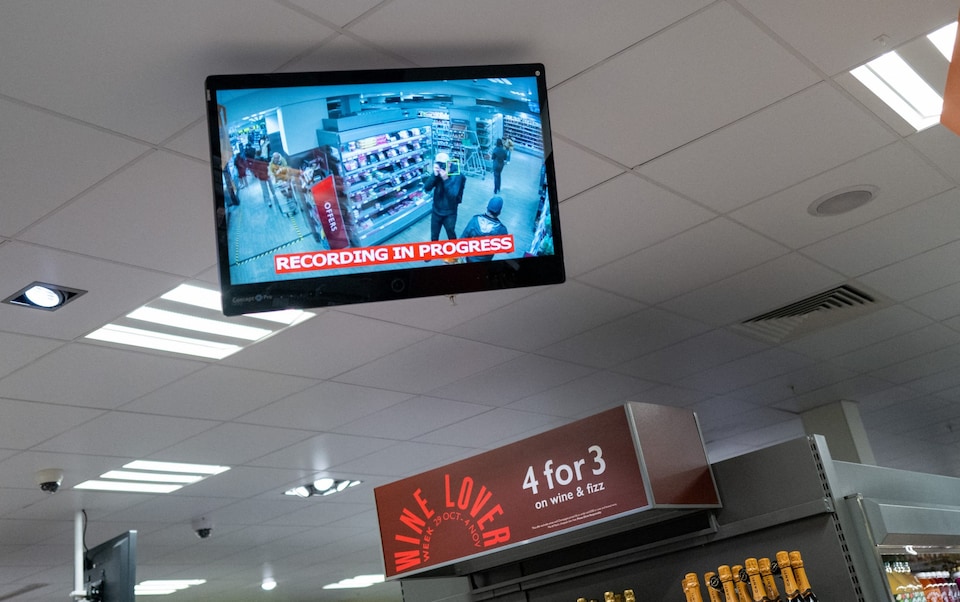
AI tech in Sainsbury’s, Sports Direct and others sent half a million ‘known thief’ alerts to staff last year
LONDON – Repeat shoplifters are being caught by face recognition cameras and prevented from stealing goods or abusing staff a record 1,400 times a day, analysis shows.
More than 100 retailers, including Sainsbury’s, Budgens, Sports Direct, Iceland and Home Bargains, have deployed the cameras operated by Facewatch in thousands of stores across England and Wales.
The system uses AI to cross reference faces against a watchlist of prolific and repeat offenders shared by local stores. When a “subject of interest” enters a shop, it sends an alert to staff, enabling them to ask the person to leave or monitor them.
Facewatch said it issued 516,739 alerts to its network of retailers in 2025, up from 252,943 in 2024. That represents 1,415 alerts a day last year, compared to 693 a day in 2024.
Nick Fisher, the company’s chief executive, said the figures illustrated the “industrial scale” of retail crime now facing businesses and the role of technology in attempting to tackle it.
He said: “The fact that alerts have more than doubled in a single year reflects both the growth in repeat and organised offenders, and the reality that retailers are under pressure to act faster, smarter and more collaboratively to keep employees and customers safe.”
Official figures show that the number of shoplifting offences recorded by police hit a record high of 529,994 in the year to June 2025, up 13 per cent in a year.
However, this is only a fraction of the true scale of the crime. A study by the British Retail Consortium estimated the number of store thefts at 20.4 million a year, costing retailers £2.6bn.
In the week up to Christmas Eve, the number of Facewatch alerts to stores hit a weekly record of 14,885, while the total alerts of 54,312 in December was the highest monthly total yet. An alert is defined as a theft deterred or shop worker spared abuse.

It is said to take the system an average nine seconds to flag up a person entering the store as a known offender. The company claims it is 99.98 per cent accurate.
However, privacy groups have criticised the technology as “Orwellian”, saying it turns shoppers into suspects, and raised fears of false accusations and innocent people being blacklisted.
One B&M customer has told of being placed on a watchlist and barred from her local store in Birmingham after being falsely accused of previously stealing a bottle of wine.
The woman, Jenny, who asked to keep her surname private, said: “It’s like we’ve made retail managers and technology companies judge, jury and executioner, with no legal due process.”
She described how a security official blocked her way into the store, telling her: “You’re on Facewatch as you’ve obviously stolen something.”
She said: “I was humiliated, really humiliated, and I think when someone says, ‘If you’ve done nothing wrong you’ve got nothing to worry about’ … if you look at my situation, you’ve got everything to worry about.”
A spokesman for B&M said: “This was a simple case of human error, and we apologised.”
Privacy campaign group Big Brother Watch has raised concerns about similar cases. These include a 64-year-old woman accused of stealing less than £1 worth of paracetamol and banned from shops, and a man alleged to have shoplifted from a store in Cardiff before being cleared by a CCTV review.
Last year, Danielle Horan, from Manchester, was ordered out of two separate shops after being falsely accused of stealing toilet roll. She called for a ban on AI anti-theft technology.
How Britain’s shoplifting epidemic is forcing supermarkets to fight back
Mr Fisher, of Facewatch, defended the system, saying: “We only store and retain data of known repeat offenders, of which it’s been deemed to be proportionate and responsible to do so.
“I think in the world that we are currently operating in, as long as the technology is used and managed in a responsible, proportionate way, I can only see it being a force for good.”
The company has insisted its “sharing of images is only of witnessed and evidenced offenders and complies with the principles of data minimisation and proportionality” and “only individuals reasonably suspected of having committed offences are on the database, not regular shoppers”.