
By Amber Bradley, Editor-in-Chief, TalkLPnews
APEX takes everything I have. People see the three days in Nashville, the stage, the dinners, the after-hours conversations that run past midnight. What they don’t see is the year leading up to it. Every speaker call, every agenda rewrite at 10 p.m., every “what if we tried this instead” that my team has to hear me say one more time. We believe our attendees deserve better than the standard conference playbook, and that kind of belief doesn’t run on autopilot. It runs on me caring an almost unreasonable amount, every single day, for months. By the time we load out, there’s not much left in the tank (and my family can tell).
Which is exactly why disconnecting isn’t optional for me anymore. Dan Sullivan and Dr. Benjamin Hardy write about this in 10x Is Easier Than 2x, and the idea I keep coming back to is what Sullivan calls Free Days. These are full days with zero work, no email, no “quick check,” no thinking about the business at all. His argument is that your biggest ideas don’t come when you’re grinding harder, they come after you’ve stepped all the way away and let your brain refill. Bill Gates famously did a version of this with his “Think Weeks,” disappearing to a cabin with a stack of books and no meetings. I used to think that was a luxury for billionaires. Now I think it’s the reason they got there. Some of the best ideas we’ve ever had for APEX didn’t come from a planning session. They came on a Sunday when my phone was in another room and I was just with my family.
LP has always been an on-call profession, and I’m not pretending otherwise. The alarm company calls at 2:14 a.m. An ORC crew hits four stores before lunch on a Sunday. A DM texts you a photo of a smashed case right in the middle of your kid’s recital and you slip into the hallway “for one second” that turns into twenty minutes. Some of those calls really can’t wait.
But somewhere along the way a lot of us decided being reachable was the same as being good at the job. Most of what pings us at 9 p.m. could sit until 7 a.m. and the business would be just fine. We answer anyway, because answering feels like proof we care.
There’s actually a term for that itch. Researchers call it workplace telepressure, the urge to respond to work messages immediately even when nothing is on fire, and the studies tie it to worse sleep and higher burnout. Other countries have taken it seriously enough to write laws about it. France passed a right-to-disconnect rule back in 2017 for larger employers, and Australia followed with its own version. I’m not saying we need legislation. I’m saying we’re behind on even having the conversation.
If you’re firing off emails at 11 p.m., your team reads that as the standard, no matter how many times you say “work-life balance” in the quarterly call. Leaders set the norm by what they do after hours, and in a field where good investigators already burn out and walk, that norm costs you people.
The action: Decide what actually counts as an emergency, write it down and tell your team. Everything else waits for business hours. (And learn to love the delayed-send button.)
It’s October. Plan it now.
We’re weeks away from the season retail sells as family time, which is exactly when LP families see the least of us. You already plan holiday staffing down to the hour. Plan your disconnect windows the same way. Put dinner on the calendar like it’s a meeting with your CFO, because if it isn’t blocked it’ll get eaten.
The action: Pick two protected windows a week through the holidays and tell someone at work who’ll cover them.
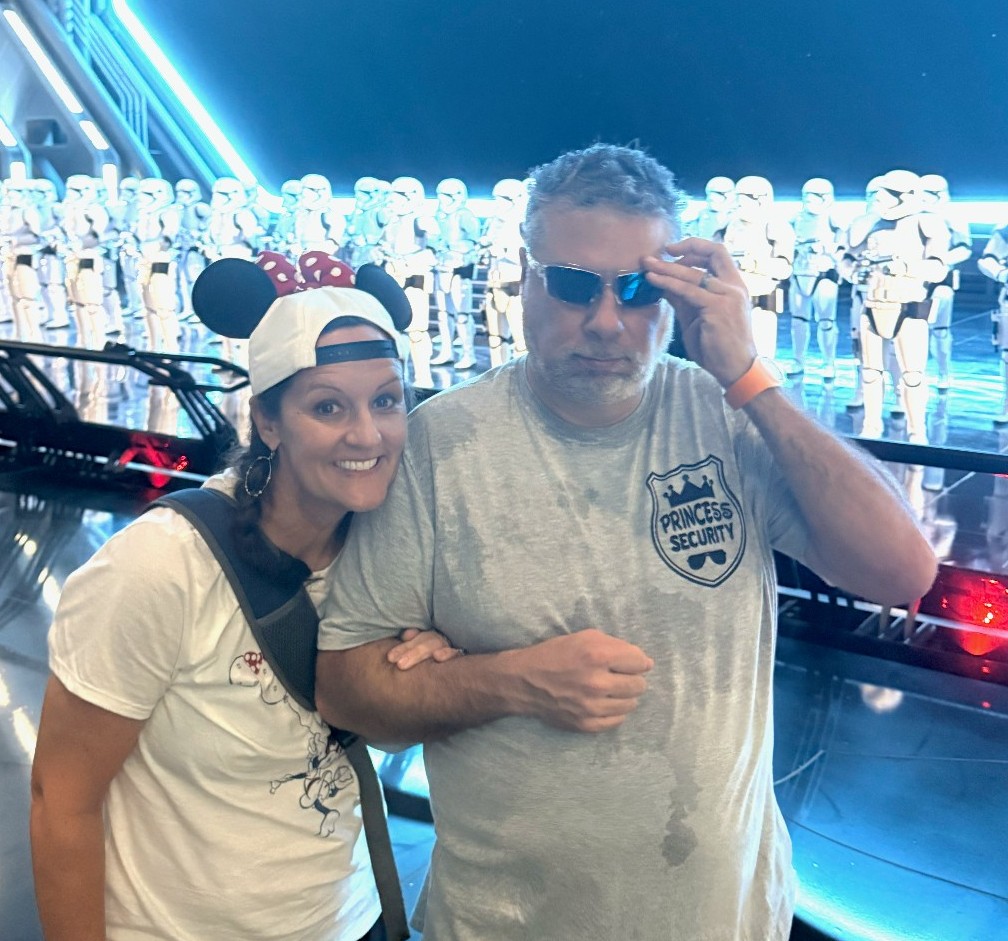
The stores will still be standing Monday morning. The incident report will still need writing. Your family is the one thing in your week that doesn’t come with a backup plan, so give them the version of you that isn’t half-listening for a ping – screaming on TRON is much better. #IYKYK