
18 May 2026
In less than one month, the FIFA World Cup 2026 will kick off in North America, uniting billions of people in enthusiasm, patriotism, camaraderie, and a love of the game. High-profile individuals will eagerly attend some of this year’s 104 matches at stadiums in Canada, Mexico, and the United States, but that means security and executive protection teams have to hustle to prepare.
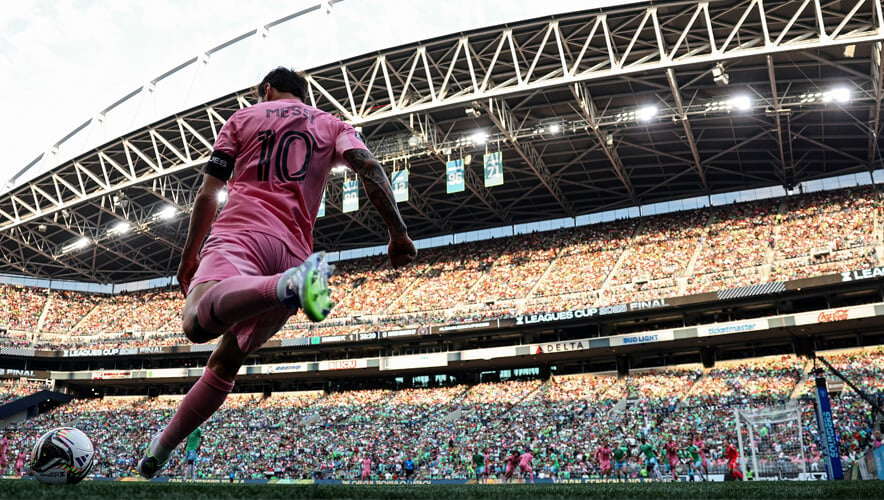
“I’ve worked every major event that you can name, but this has been the biggest,” says Anton Kalaydjian, president and CEO at Guardian Professional Security, which provides event security and executive protection (EP), including for the Miami Dolphins NFL team and Inter Miami CF, which boasts soccer superstar Lionel Messi. Kalaydjian is also a member of the ASIS Executive Protection Community.
When he worked a protective detail for a celebrity during the 2010 FIFA World Cup in South Africa, Kalaydjian was “taken aback by the volume, the thunder of being on that pitch with my principal and just looking around—it’s nothing like the Super Bowl.”
This year, fans will be spending large sums to travel to 16 different cities around North America and root for their national teams, and that dedication has incident escalation implications, he says. “Country pride is a big thing—they’re going to be super passionate, they’re going to feel like you’re disrespecting their country and their family if you go against their team.”
He adds, “You mix in the weather, the heat, the alcohol intake, the long days, the tailgating—they call them fanatics or fans for a reason. You’ve got that tier, but then you’ve got an even higher tier of security risk with the hooligans. These are the guys that live, breathe, and die for their soccer team. They’ll bring smoke sticks, they’ll bring drums, trumpets, huge banners. We use the word ‘passionate’ to be nice, but they get nutty, and it can be a security nightmare if you don’t know how to work with the crowd.”
At Nu Stadium in Miami, Kalaydjian works with the leader of the Inter Miami supporters—a local police officer—who serves as a conduit to the rest of the crowd to help communicate about rules and banned behavior. But for most security leaders working details at the World Cup, they will not have those close relationships with local intelligence sources, fan liaisons, and other allies. While holistic security and executive protection measures are a good place to start, the complexity of World Cup matches and interpersonal dynamics means that security executives will need to customize their approach.
“There’s no one-size-fits-all approach to security, especially at the scale of the World Cup,” says Chris Pierson, founder and CEO of digital executive protection firm BlackCloak and a former U.S. Department of Homeland Security official. “While a holistic approach is essential, it cannot be static. The right model is a comprehensive executive protection framework that is customized by venue, city, travel route, and threat environment.”
Security teams should already have a baseline of travel security measures, communication protocols, incident response, device protection, and more, but plans should deviate when given the local risk picture, including transportation routes, hotel exposure, stadium ingress and egress, protest activity, crime trends, local law enforcement coordination, medical access, evacuation options, and country-specific cyber threats, Pierson says.
That’s a lot to plan for 104 matches, but it’s highly unlikely that a principal will want to (or be able to) attend all of the games, Kalaydjian says. So, EP teams can start their advance work by streamlining the number of potential matches to consider.
“It’s important to speak to your principal and find out what team they are going for,” he says. “Are they from Colombia, or are their parents from Colombia, and that’s the team they want to see? That helps you out, because in that case, you’re not going to have to go to 16 different stadiums. You’re just going to have to go wherever Colombia’s playing, for the most part. It’s important to find out from the principal himself, or his management, which games we are going to. Then you can send out your virtual advances to those points of contact.”
Kalaydjian recommends running advance work in two stages: virtual and physical. The virtual advance is primarily relationship-building and knowledge-sharing. It can be as simple as introducing yourself to the stadium security director via email, getting on a phone call or Zoom meeting, and letting them know who’s coming to the match. If there’s enough time, the EP professional can also request a physical advance with a stadium security professional for a behind-the-scenes walkthrough for the areas that the principal could access.
“You don’t have to know the entire stadium like the back of your hand, but at least know the zones that you’re going to,” he says. That will help reduce the number of risks that EP teams will need to account for in depth.
“Chances are your principal’s not going to be in an area where the hooligans are; that’s more general admission,” Kalaydjian explains. “They’re probably going to be in the VIP areas, which we have allocated for them.”
Before reaching those VIP areas, security teams also have to carefully plan how principals will arrive at and leave venues.
Data compiled by Base Operations for a series of stadium threat assessments found that many transit hub areas near 2026 World Cup venues show high rates of vehicle theft, aggravated assault, or drug activity, supporting a recommendation for secured transportation for principals.
“That said, there are clear differences between venues,” says Base Operations CEO Cory Siskind. “AT&T Stadium in Arlington (Texas) has one of the safer transit profiles. The CentrePort/DFW Airport Station scored a BaseScore of 20 (very low risk) compared to the stadium itself at 45 (medium). That’s a significant gap in the right direction. On the other end, venues like BC Place in Vancouver and Lumen Field in Seattle have transit hubs that are higher risk than the stadiums themselves. Vancouver’s Stadium-Chinatown Station scored an 82 (very high) versus the stadium at 77 (high). Seattle’s International District-Chinatown hub showed 10 times higher concentration of drug activity and 3.5 times higher aggravated assault rates per square mile compared to the broader stadium zone. Those are the venues where secured transport is more advisable based on the data.”
The divergence between stadium and transit hub security is notable, and an actionable finding for security and close protection professionals, she says.
“A security director running the same playbook at every venue or analyzing city-level data would miss it entirely,” Siskind says. “The baseline approach can cover vehicle security, temporal planning, and general threat awareness. But transit routing, egress protocols, and close protection positioning need to be customized venue by venue based on that specific stadium-to-transit-hub relationship and street-level threat analysis.”
You don’t have to know the entire stadium like the back of your hand, but at least know the zones that you’re going to.
For close protection and security drivers working World Cup events, expect a lot of road closures and be ready to change routes at a moment’s notice, Kalaydjian says.
“I would go advance the route myself,” he says. “But even when you advance it, don’t think it’s going to look like that day-of, because there are going to be more changes, there are going to be more road closures, but at least you’ll have a general idea of where you’re going.”
Talk with the venue security team during the advance to determine what routes to use, the credentials individuals and vehicles will need, and where the group is allowed to go. Determine what weapons policies will be in place and if close protection teams should leave any firearms off the premises, not just locked in the vehicle. If the principal will need a police escort, security teams should call the local police department’s special events division as early as possible to book the trip, because “everybody is going to have police escorts, and there’s only so many police to go around,” Kalaydjian adds.
That early outreach is critical on multiple levels.
“It’s a monster event: It’s the largest sport and the largest sporting event in the world. All eyes in the world are looking,” he says. “So, it’s important that you respect the venue and respect the police department by giving them as much of a heads-up as you can, because if you don’t you’ll be without an escort, you’ll be without physical help from the stadium when you get there, because they’re going to say ‘Sorry guys, nobody reached out, so you’re on your own.’”
Respectful communication results in intelligence updates, too, Kalaydjian says.
“We’re a private security company. We keep our ear to the ground, but we don’t have the resources local PD does with any threats or any kind of situations that might arise,” he adds. The communication goes both ways, though—private security teams can act as a force-multiplier for public security functions, both with a physical footprint on site and with intelligence monitoring of social media or fan pages from known figures or groups around the venue.
“That local intel and using our resources has helped us see the smoke before the fire,” Kalaydjian says.
In the event of an incident or emerging issue, security teams should be ready to calmly explain any changes and requests to the principal. He or she might be excited and ready to get into the stadium for the national anthem or kickoff, but if people are rushing the gate to gain entry, a delayed entrance or detour to another gate is preferable.
“It’s usually a ‘hate me now, thank me later’ situation with them, but if you’ve got a good relationship with your principal where they trust you, they’re going to totally understand,” Kalaydjian says. “Also, they understand that we’re not dealing with baseball fans here, we’re dealing with World Cup soccer fans, and things like this are going to happen. It’s not something that’s so surprising for a principal to understand.”
Protective details might also get some pushback on social media recommendations and restrictions before and during matches, even though posting postgame is often the safer course of action.
“While capturing the moment is natural, real-time posting creates unnecessary risk from bad actors monitoring online accounts and activity,” says Pierson from BlackCloak. “That’s why it’s critical to delay sharing whereabouts until after the event concludes, avoiding disclosure of exact locations, hotel details, transportation movements, or family attendance.”
The younger or more digitally connected the principal, the harder that argument is, though, Kalaydjian says. It’s important for principals to overcome the urge to post immediately, which can let people in and out of the stadium know where the VIP is located. Instead, Kalaydjian will recommend clients take all the footage they want and save the posting until the next day. This won’t work for all clients—celebrities are recognizable figures who will be spotted by other people in the crowd anyway.
“But for executives, it’s a lot easier because nobody really knows who they are unless they tell on themselves, and that’s by livestreaming or taking selfies and posting it right away,” he says.
It’s important that you respect the venue and respect the police department by giving them as much of a heads-up as you can.
This conversation is where having a long-term relationship with the client pays off, especially if the EP professional doesn’t usually arm-wrestle the client out of lower-risk choices too much.
“You want to pick and choose where you’ve got to put your foot down,” Kalaydjian says. “If they’re going to do something risky, let them do it if you feel like you have control over it, depending on the risk factor. If it’s something that you have to put your foot down on, your principal’s going to listen, because you let him do other things. If you arm-wrestle your client for everything, it’ll make your life easier as an agent to protect him, but your principal’s going to get fed up.”
Instead, if the EP agent rarely says “no” and instead works around the principal’s choices, it carries extra weight for the client when an action is firmly denied, especially when it comes with an explanation.
“Most of our principals are intelligent, because they wouldn’t be successful if they weren’t,” Kalaydjian says. “They can understand and comprehend the denial, because at the end of the day, you just want them to be safe, so they can’t really be upset at that.”
Claire Meyer is editor-in-chief at Security Management. Connect with her on LinkedIn or via email at [email protected].