

Analysts note Iran realizes its position in the war – while still uncertain – is allowing it to become more overtly aggressive and provocative. And while many of Iran’s asymmetrical tools are being employed to support this, one of the more effective – according to analysts – propaganda campaign on social media.
In particular, analysts point to Iran’s use of Legos videos to mimic/ridicule the U.S. and Israel have been highly effective. They not only touch upon a growing anti-war sentiment within the U.S., but also, they are being watched by the President and the Administration – who are not happy with them. This latter observation alone illustrates to analysts the fact that Iran is having its desired impact.
Where do things go from here?
What is becoming clearer to the Iranians is that the longer the war continues the stronger their position becomes. Their response to Trump’s decision to keep the U.S. naval fleet positioned outside of the Strait was quick and decisive – i.e. not only closing the Strait but attacking two tankers.
Iran knows that the worsening economic situation internationally is an open nerve for the U.S. – and it is willing to poke at it to gain leverage in its negotiating position.
This is not to say that the Iranians are also not keen to end this war. There are contrasting views internally among its new/uncertain leadership. They are also facing a determined Trump and Israel which are not willing to step aside quickly – or as quickly as they would like.
For the President, his message of resolve and that his patience for an agreement is not endless is key to understanding the U.S. course.
Lessons learned from how Iran negotiates
One of the key lessons learned during the JCPOA negotiations is that Iranians are adept as deflection. They will engage a party along a certain line, giving hope for it to bear results, but then either defer to others for their consent or have that line of negotiation run contrary to another track.
Over the decades this has not only bought Iran time but has placed the U.S. and others in precarious political situations that have forced them to concede on points in order to achieve an agreement – which was needed politically due to domestic realities.
This explains why one of the recent conditions for the continuation of ceasefire talks is that the Iranian delegation needed to be empowered by the IRGC to make decisions.
Drawing out this process does not aid the U.S. and Israel, only Iran.
And while the President is oft criticized for his threats, he and the Administration believe such threats did force Iran to come to the table and agree to a cease-fire.
Analysts believe the central issue for any agreement will be the nuclear issue.
- For Iran – analysts believe it is willing to pursue such an agreement with the hope that the settlement will provide it with flexibility to return to pursue its nuclear efforts after some/a few years.
Iran’s goals have not changed, but it now hopes to broaden them.
- It still wants to survive, but it also wants to be able to show itself as being the only nation that successfully withstood the might of two global powers (the U.S. and Israel) .
- Iranian leaders believe this will provide them with enhanced legitimacy, and more importantly. time to rebuild.
- The legitimacy is not only for political purposes, but also to sustain the Islamic Republic’s reputations as a leader in the region.
Importantly is the fact that if the U.S. and Israel pursue such an agreement, they must understand that Iran will be emboldened and determined for revenge moving forward.
Iran does not forget…
Analysts are quick to point out that Iran does not forget.
This held for the killing of Qassem Sulaymani and will also hold for the killing of Supreme Leader Ali Khamenei and much of the leadership of the government. And it also holds for the near destruction the U.S. and Israel unleashed on Iran’s industrial and defense sectors.
Analysts see these realities in stark term – and parallel to much witnessed to date in the war.
Specifically, Iran has made a point of responding in a corresponding fashion when it comes to attacks by the U.S. and Israel. And while a ceasefire/peace agreement will likely end active hostilities in the region and beyond, asymmetrical force will be leveraged moving forward.
- Already the U.S., Israel and their Gulf allies have seen Iranian cyber-attacks increasing – with the UAE fielding as many as 500,000 in one day alone.
- Analysts and analysts know this will increase – with efforts to target manufacturing/SCADA systems as well as critical infrastructure being the top targets moving forward.
- Furthermore, leadership targets will also be more actively pursued, especially when they are out of power. This is something seen after the Qasem Suleimani attack – whereby Trump, former secretary of state Mike Pompeo, and former national security advisor John Bolton were among those targeted by Iran.
Nevertheless, the expectation is an agreement will likely be reached in the coming months.
- The U.S. will present this as a victory – having destroyed Iran’s capability/capacity to develop a nuclear weapon.
- The missile program and support for proxies will be addressed as having been achieved earlier in the war – despite the continuing of missile/drone attacks against Gulf partners up until the cease-fire was signed.
- For its part Iran will also claim victory – pointing out it was able to survive the heaviest and worst attacks by the U.S. and Israel since the Gulf War.
Unintended consequences – so far…
But of greatest concern to analysts is not who actually wins and who loses, but how the war will resonate internationally and impact on all parties moving forward.
While they are confident the U.S. military has shown itself to be highly competent and capable, cracks in the U.S.’ armor – i.e. the impact of Iran’s drones and targeting of U.S. radar systems – have been shown to be a possible Achilles heel.
Politically, the way the war started and developed is also assessed by analysts as concerning.
They point out it is hard for the U.S. to have the moral high ground when it comes to other wars (i.e. Ukraine) or flashpoints (i.e. Taiwan) moving forward.
Also, this conflict begs the question – do U.S. assurances that it will defend an ally mean anything in real terms? While the U.S. did respond significantly in support of its Gulf Allies, they still were impacted greatly – with the U.S. unable to do anything materially to stop it. Therefore, does aligning oneself with the U.S. make sense moving forward?
That said, these hostilities bring to the forefront Iranian activities over more than 40 years – pursuing an agenda intent to foment instability and strife.
The decision to engage Iran directly – target those programs of concern – is seen by analysts as a signal that such behavior will not be accepted moving forward.
But how the U.S. and Israel choose to engage Iran moving forward – and what they will accept – will resonate significantly and drive the path forward for years to come.
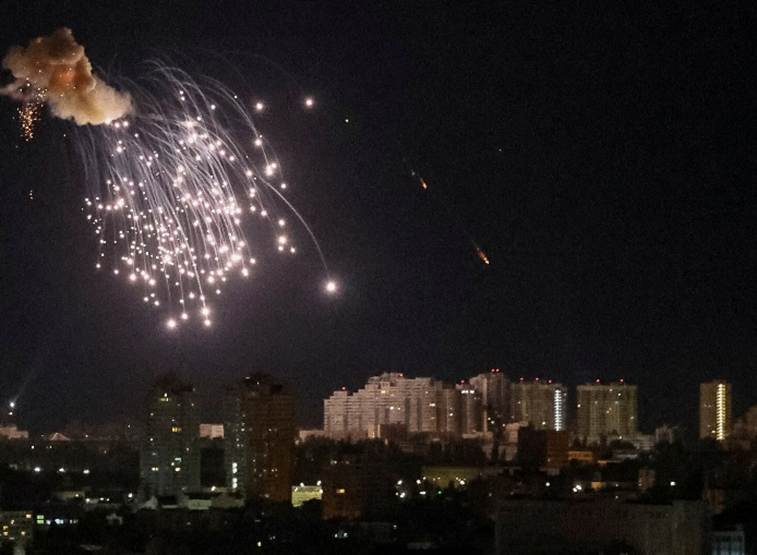
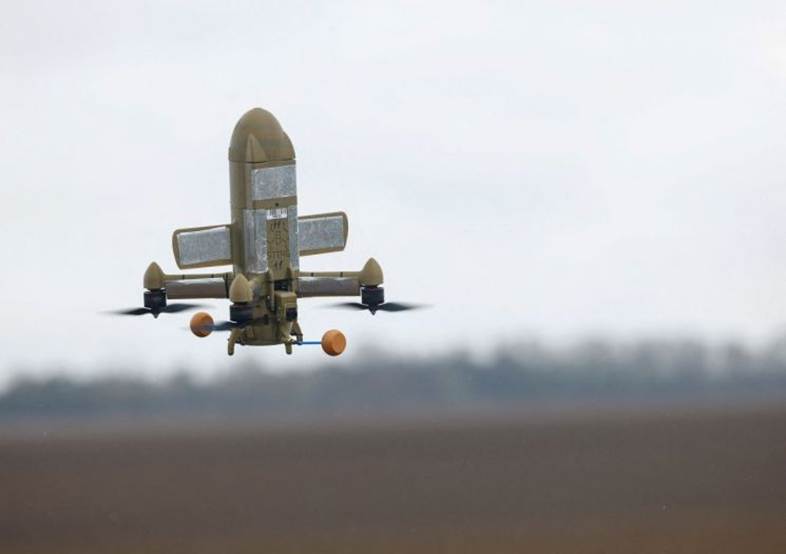
Where do things stand with the Ukraine War?: According to analysts, the war is starting to lean a bit in Ukraine’s favor at the present time. While the Russian onslaught has been ferocious – with reports that recent attacks have targeted and killed more civilians than at any time to date – Ukraine continues to not only hold its own but also to inflict massive losses on Russian forces.
In discussing the status of the war, analysts start by providing their overall context. They explained that the war has proceeded across four stages to the current period.
- The initial assault.
- The initial Russian invasion was expected to last three days, with Moscow thought to be able to roll over the entirety of the country shortly thereafter.
- This did not happen, with Ukrainian forces and people responding in a way that not only surprised the world but forced the U.S. and Europe to provide Zelensky and his government with real, meaningful support.
- The Ukrainian counterattack
- While Ukraine displayed resolve and commitment in rebuffing Russia’s advance, unfortunately its military did not have enough material support from the West to see it through. As such, the war devolved into what many characterized as being a WWI scenario.
- Trench warfare
- As noted, the war shifted into one in which both sides hunkered down and little/no progress was made by either party.
- Lines were solidified with artillery killing the vast majority of the soldiers and civilians impacted.
- Drones
- Seeing the writing on the wall vis-à-vis the unwillingness of not only the U.S. but also European allies to provide real support, Ukraine shifted to develop a domestic capability to fight the war.
- This led to the quick and significant development of the Ukraine’s drone program – which by all accounts has been highly success and a model for the future of warfare.
In looking at the current state of the front, as noted previously in the Update, it is considered to be a 40km no-mans land/zone of death. Because of the ubiquity of drones – which are watching all areas along the front 24/7 – it is next to impossible for military units/soldiers to maneuver. That said, both sides have pursued different courses to achieve their goals.
For Russia – It does not care about protecting its soldiers. Its sole focus is to seize as much territory possible. And this approach is clear when one looks at Russia’s performance in January 2026 – the Russian military was willing to sacrifice more than 35,000 troops to gain little/no territory.
- Russian long-ranged attacks in Ukraine have focused on the civilian population, the energy grid, and Ukrainian military production.
- Historically, attacks on civilians for the purpose of breaking their morale do not work, despite all the misery they inflict.
- These attacks on the energy grid were primarily focused on causing a humanitarian crisis during the coldest winter in 20 years
- Russian forces also leveraged a new strike tactic allowing it to threaten more areas of Ukraine for longer periods of time and disproportionately affect civilian areas. Specifically, Russian forces time the waves of strikes such that the first wave of drones act as “combat reconnaissance” ahead of the two main waves of strikes.
- In this paradigm Russian forces use cruise missiles in the first wave and ballistic missiles in the second wave.
- The goal is to exhaust Ukrainian air defenses with long-range drones and cruise missiles, for both of which Ukrainian forces have high interception rates, ahead of ballistic missile strikes, which Ukrainian forces struggle to intercept.
- Russia seeks to take advantage of a global shortage of Patriot interceptors and the current war in the Middle East to escalate its strike campaign against Ukraine
For Ukraine – Concerns related to its manpower numbers drives its approach. Rather than risk the loss of troops, Ukraine’s approach is to hunker down/dig in to protect its soldiers while looking for opportunities to seize land either via drones or other opportunities that present themselves due to missteps by the Russians.
- Ukraine is using sustained operations up to 90 miles from the front line to slow the flow of Russian troops and make it difficult to sustain them. This reduced flow provides Ukraine with more time to engage Russian soldiers once they reach the front lines.
- Overall, Ukraine’s objective is to slow the Russian advance and kill more Russians than can be recruited. If Russian losses and recruitment remain at the same levels they have for the last four months then Russia will have 65,000 fewer men in Ukraine by the end of the year – a 9% reduction of the nearly 700K troops Russia has in Ukraine now.
- As such Ukraine is now re-focusing on two objectives:
- To degrade Russia’s economy.
- To destroy factories that build military components.
To achieve these objectives, Ukraine is destroying Russian air defense systems faster than they can be replaced. This comes at a time when Ukraine sent more drones into Russia than Russia sent into Ukraine – Russia claims that they shot down 7,347 drones in March, an average of 237 drones a day, while Ukraine said Russia used 6,462 drones, an average of 208 drones a day.
Regardless, there is a functional stalemate on the ground right now, with small-to-no advances being made, and both sides fighting for drone superiority. That said, the realities on the ground are slowly changing.
- The percentage of Russian drone hits decreased from 19% in October 2025 to 8% in March 2026, even though the number of drones increased in March.
How Ukraine is creatively using drones
While drones are proving highly effective for both sides, for Ukraine it is not only using them to support operations but making them the fundamental building blocks for military units themselves – supplanting more traditional structures.
Leadership – both political and military – are supporting this effort and using it to enhance moral and quantify and incentivize success/creativity on the battlefield.
As all drones carry cameras, the Ukrainian military leaders learn real time – and with the help of AI – how to make them more effective in identifying and destroying threats.
Often the military had been using one person to watch the video feed from the drone to identify a threat. With AI the game has changed. Now systems can monitor thousands of feeds and identify the slightest irregularity for any threats.
- For instance, drones recently located the tips of rifle muzzles poking through foliage to identify and neutralize threats.
- Also, the camouflage coverings used to hide artillery/tents in the field can be better analyzed and identified via AI – as they have sharp edges which are not found in nature.
In this new reality, Ukraine can more effective count how many Russians have been killed – as the video makes it clear. However, senior Ukrainian analysts also note that numbers – such as the 35,000 killed Russians – while based upon the video analysis, could be higher given the fact that many drones will be flown directly into reinforced bunkers when tracking targets. As such, while the target enters the bunker, there could also potentially be many others present – who are not counted by the AI.
Interestingly, the effectiveness of drones has instilled fear into the Russian troops – many of whom will surrender to drones.
Analysts note Ukraine will accept such surrenders, but they also note that in some cases soldiers will cower in corners with their backs to the drones. In such instances, the Ukrainians will fire upon the soldier as they are not sure if they continue to represent a threat.
Points and Ground drones are evolving the landscape
A new system of points has been developed to motivate units. Specifically, units earn points for confirmed kills of enemy soldiers and/or the destruction of different types of equipment/armament. These points are used not only for bragging rights between the units, but also for the units to exchange for supplies and equipment from the military.
Relatedly, not only have aerial drones changed the battlefield, but the use of ground drones/robots is becoming prevalent.
- Robots/drones carrying mortars or machine guns are being used on the front lines or to respond to assaults by the Russians.
One tactic being used is to encourage the Russian unit to attack. Soldiers/aerial drones/ground drones respond to the assault, but other drones that lay mines are deployed behind the assaulting Russians.
When the Russians fall back, the fleeing force runs directly into a mine field and are slaughtered.
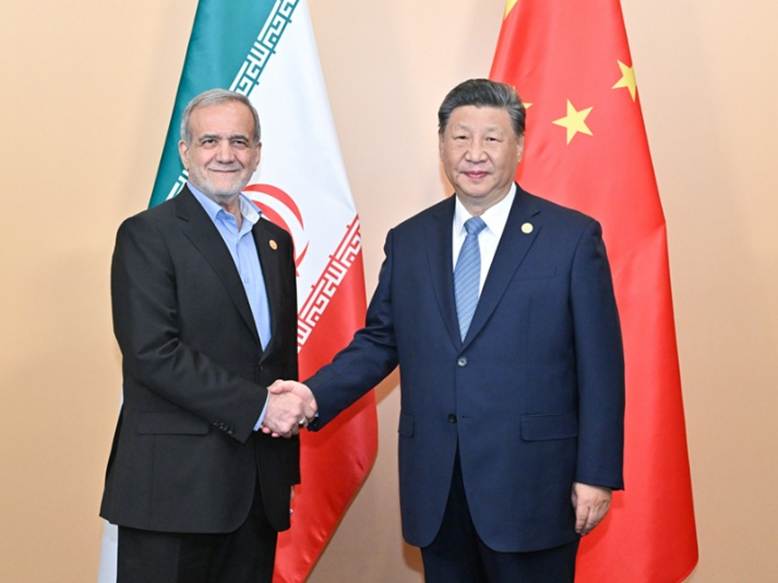

China and Iran – How is Xi navigating these waters?: Although Chinese Foreign Minister Wang Yi and Iranian Foreign Minister Seyed Abbas Aragchi have communicated frequently since the launch of EPIC FURY, on 15 April, something quite subtle but significant transpired.
- During a diplomatic call, as usual, Wang reiterated to Aragchi that Iran’s sovereignty and legitimate rights must be respected.
- Wang then did something completely different and unexpected; he explicitly stressed the freedom and safety of international navigation through the Strait must be guaranteed.
- He noted that restoring normal transit through this vital waterway is a shared, unanimous demand of the international community.
China blinked.
Analysts assess China as having admitted – in a roundabout way – that they have had enough and Iran needs to open the Strait of Hormuz. But why?
Analysts point to the energy trap.
- Before EPIC FURY, China was Iran’s primary lifeline – purchasing approximately 1.4 million barrels/day; roughly 90% of Iran’s total oil exports went to China.
- Analysts highlight that approximately 18% of China’s crude oil imports come from Iran. And as of 28 February – the start of EPIC FURY – China’s energy needs were operating on borrowed time. Something analysts believe is running out seven weeks into the war.
But they note China is contemplating its next move.
- China’s prodigious energy reserves, highly diversified energy import mix, and world-beating renewables buildout have all helped to insulate it from the immediate impact of the conflict.
- But as the war drags on, the economic pressure is building:
- China’s energy cushion shrinks each day the war continues.
- Cost-push inflation related to oil supply disruptions is squeezing corporate margins.
- Trump’s new/renewed blockade of the Strait of Hormuz is further threatening international supply chains and global economic growth.
This is not all negative for the U.S. and the West.
Analysts offer that China is now in the uncomfortable and largely unfamiliar position of needing to throw its diplomatic weight around to influence a volatile situation far from its borders.
- Beijing was central to convincing Iran to accept the recent ceasefire with the U.S., but sought to keep its involvement quiet, preferring to let regional countries like Pakistan take credit for mediation.
Moving forward the issue analysts are focused on is – as the Iran crisis increasingly bumps up against China’s economic interests, will Beijing play a more assertive role in bringing the conflict to an end?
Analysts point out that for all its global influence; China is ever the cautious diplomat when it comes to crises far from its borders.
- After Russia invaded Ukraine, Beijing refused to be pressured into formally supporting either side, despite its close relationship with Moscow.
- Likewise, China was almost a non-entity when it came to brokering a ceasefire between Israel and Gaza.
Beijing’s logic is simple – It does not benefit China to wade into complicated foreign entanglements when it does not absolutely have to.
But this time could be different.
- While China maintains large energy reserves, every day the Strait of Hormuz remains blocked eats into that all-important buffer – not to mention hitting Chinese access to a swathe of other critical industrial inputs.
- Meanwhile, energy price shocks are squeezing corporate profits and undermining consumer sentiment at home, as well as foreign demand for Chinese exports on which the country’s economy relies.
Then there are the growing risks to China’s relations with the U.S.
The longer the conflict drags on, the higher the likelihood the Trump Administration will lash out at China – Iran’s perceived benefactor.
- The U.S. has threatened sanctions against Chinese entities involved with the purchase of Iranian oil, and the possibility of the U.S. Navy interdicting a Chinese ship is a diplomatic crisis waiting to happen.
Beijing’s ties with Tehran are also coming under intense scrutiny.
- Recently U.S. intelligence claimed China was preparing a shipment of air defense systems to Iran, though China has denied this.
- The claims prompted Trump to write a letter to Xi Jinping warning him against supplying Iran with weapons.
- Leaked Iranian documents suggest that Iran purchased a Chinese spy satellite in 2024, which it subsequently used to target U.S. military bases in the Middle East.
Therefore, a breakdown in China-U.S. ties over Iran – especially with the China/U.S. Summit in the offing – would effectively undo months of painstaking effort aimed at putting the relationship on a more even keel and return the two countries to a dangerous state of rivalry.
And while President Trump has signaled his willingness to keeping things civil with China, it is unclear if this will continue up until the time he travels to China for the 14/15 May Summit.
Implications for China
The Iran war is a global geopolitical crisis with a direct, immediate impact on Beijing’s core interests – across a range of different channels.
If China sticks to its usual conservative playbook, it could forfeit its ability to influence the outcome and allow the risks to proliferate.
So far, Beijing’s efforts regarding Iran have focused on quiet backchanneling to try to resolve the conflict:
But analysts point out that the big problem is that despite its low-key approach, Beijing has already made it clear it is involved – raising expectations that it is key to resolving the crisis.
- Both Trump and Iranian analysts acknowledged Beijing’s role in brokering the recent ceasefire.
While this could help burnish China’s reputation – which it is working to develop via its aggressive overseas/diplomatic travels – as the peacemaker in the newly forming world order if it works, it could also hurt should peace efforts fail.
This is also bringing to light a reality that China needs to address.
In the years ahead, China will face greater pressure to come off the sidelines and play a role in resolving global crises commensurate with its immense economic and political influence.