

Senior law enforcement officials have noted a number of trends over the past year that are expected to continue moving forward. They not only are driven by ideology, but also by events, grievances and other idiosyncratic motivations – many troubling. In fact, officials have described the current situation as the “everything all-at-once” threat environment.
Radical Islamic Terrorism
Over the past year officials have witnessed an increase in ISIS directed and inspired operations both internationally and domestic to the U.S. This is in addition to an increasing number of Hamas-affiliated operations, many linked to the war in Gaza, as well as Iranian lethal targeting operations – focused on opposition figures and perceived threats across the globe.
In trying to assess those affiliated with foreign terrorist organizations (FTO), officials are hard pressed to identify trends that would allow them to be able to forecast the timing or location of future operations. Essentially, these attacks are occurring across the U.S.
And they range from those which literally take a page out of the ISIS playbook:
- The New Years eve 2024/25 attack on Bourbon Street in New Orleans in which an ISIS inspired assailant used vehicle ramming, firearms and IEDS to kill 14 people and wound 57.
To those looking to provide material support to ISIS:
- On 14 June 2025 a suspected ISIS supporter attempted to provide material support as well as discussed traveling to the region.
- On 19 December 2025 a suspected ISIS supporter was charged with providing bomb making materials to ISIS.
While such incidents are troubling to law enforcement officials given their randomness, they note that the trend of lone actor inspired operations continues, having first started in circa 2010. As such, being able to identify these individuals and their plans – either via monitoring activities in chat groups, social media sites, and/or tips from family/friends – is the best way to prevent them. And given the difficulties in scraping the internet, officials point to human intelligence as key.
Nihilistic Violence
A trend which has surfaced over the past year is nihilistic violence. This is best illustrated by the group 764, which first surfaced on Discord in 2021. This troubling trend is directed primarily at children and involves groups grooming children online in various forums.
Disaffected and emotionally troubled children are the target for such efforts, with the goal of escalating their behavior to include filming themselves involved in acts of self-harm that gradually desensitize the children – often leading to their deaths.
Law enforcement officials are scrambling to not only educate the public of the dangers of this trend, but also to disrupt the groups’ leadership.
This is also playing out in school shootings, which are often thought to be lone wolf events. What officials are seeing is that many times those undertaking such attacks have been influenced/directed by these groups, where the children often mimic and/or venerate one another – causing a contagion effect.
Websites related to gore porn and other extreme sites are used by these groups to start the process of desensitizing children, while encouraging them to post their own content to validate themselves and their feelings.
One of the challenges law enforcement finds with these cases is the difficulty there is in prosecuting minors – something that the courts are slowly allowing given the horrid nature of these criminal activities.
Political violence
Another trend that has become more present in the U.S. is the increase in assassination attempts against individuals representing political concepts or ideals.
This was most clearly illustrated with the 10 September killing of Charlie Kirk. However, it has also been manifested in the two failed assassination attempts against President Trump (13 July 2024 at a rally in Butler, Pennsylvania, and 15 September 2024 while golfing in West Palm Beach); the killing of two Israeli diplomats outside the Capital Jewish Museum in Washington DC on 21 May 2025; as well as the targeted killing of Brian Thompson – the CEO of United Healthcare.
And this is growing with the rise in antisemitism across the U.S. and abroad. Officials noted that more than 75 violent events were countered since 07 December 2025 which targeted Jewish community centers across the U.S. and the Israeli Embassy in Washington DC.
This category also includes anti-government anti-authoritarian violent extremism (AGAAVE) attacks, which included:
- 04 July 2025 – Benjamin Hanil-Song coordinated a 12-person attack targeting ICE detention facility in Alvarez, Texas leading to 1 person wounded.
- 07 July 2025 – The front door of a CBP Annex was shot in McAllen, Texas.
- 24 September 2025 – Joshua Jahn was killed by officers while shooting at an ICE detention center in Dallas, Texas leading to 2 killed and 1 wounded.
- 15 December 2025 – Authorities arrested several individuals in California who were planning a New Year’s Eve attack directed at ICE officers.
Officials note these attacks tend to be better organized and more complex than others they have seen. And as the confrontations between ICE and protestors continue, those opposing the deportation efforts have enlisted more complex and intricate methodologies to disrupt the operations, as well as to identify the officers involved.
Grievance-fueled violence
Unlike in previous years, officials are noting an increase in attacks inspired by personal/societal grievances – often being carried out by lone gunmen. While this trend was most prominently seen with the 04 December 2024 killing of United Healthcare CEO Brian Thompson on the margins of an investor conference in NYC, there have been a number of others in 2025 which have raised concerns related to the likelihood of this trend continuing. They include:
- 01 January 2025 – Matthew Livelsberger ignited a VBIED in his Tesla truck at a hotel in Las Vegas.
- 17 May 2025 – Guy Bartkus targeted a fertility clinic with a VBIED in Palm Springs, CA.
- 28 July 2025 – Shane Tamura killed 4 people in a mass shooting event at 345 Park Ave, NYC.
- 08 August 2025 – Patrick White killed one person when he opened fire on the CDC headquarters in Atlanta, GA.
- 28 September 2025 – Thomas Sandford killed four people in an attack at a Mormon Church in Grand Blanc MI.
- 13-15 December 2025– Claudio Valente killed three and wounded nine in attacks at Brown University and MIT.
And while many of these grievances are inspired by religious, personal, or political drivers, officials note there are fringe groups which are also engaging in such activities.
In particular, they noted the 17 May attack was undertaken by an individual affiliated with the efilism movement. Efilism (which is Life spelled backwards) espouses a belief that people never consented to be born. As such, proponents of this group can therefore take lives, believing that the ending of all life would prevent future suffering. While a small group, as the 17 May attack illustrates, it nevertheless presents a threat.
Oversea-inspired events
While not new, officials have noted an increase in the impact global events are having in the U.S. – particularly in inspiring protests, violent activities, and influencing individuals via social media and other forms of online interaction.
Events such as the war in Gaza, the U.S. military action in Venezuela, the ongoing war between Russia and Ukraine, as well as ongoing violence across Africa have all inspired protests and violent activities in the U.S.
For officials, while they are tracking these events, it is difficult to assess or project where, how and when they could lead to violence in the U.S.
Looking ahead
Officials believe the aforementioned threat vectors will continue to manifest themselves through the coming year – and beyond. That said, they do foresee new areas starting to gain traction. These include:
- Anti-Tech violence: With the advent of AI and quantum computing, officials believe their impact on society and individuals with be significant. In particular, it will likely affect the economy, causing a shift in jobs that will affect many industries that can be converted to AI-driven tech. While this is being discussed now to prepare sectors for the transition, given the fact that large numbers of Americans work in these fields and do not have the requisite training to shift easily – officials expect there to be a likely reaction they need to prepare for.
- This could include attacks on data centers and other infrastructure, as well as more grievance-inspired attacks – with corporate leaders being viewed as responsible and thereby a valid target.
- Anti-government movements: Such attacks have started in earnest with the expansion of the ICE arrests across the country. These are expected to increase, especially as protestors are attacked/killed – not only inspiring broader opposition to the programs, but empowering those involved who see reactions such as ICE leaving Minnesota due to the fallout from the Renee Nicole Good and Alex Pretti killings. And these are likely to increase due to the persistence of global flashpoints, domestic tensions and intense political polarization – which have already driven AAGAVE inspired attacks against government symbols, officials and law enforcement personnel.
- Also, the increase in various threat actors holding hyper-individualized and largely unknown grievances against various institutions, presents a challenge to interdiction efforts and requires effective preparedness by public/private security personnel.
China sees the door open: According to analysts, as well as senior European officials, China views the current confrontational policies undertaken by the Trump Administration as providing it with a unique opportunity to develop and advance its relationships with traditional U.S. partners – most notably Europe. As such, China is aggressively proffering itself as a voice of moderation, reason, committed to the international order as it doubles down on bilateral diplomacy in Europe.
This was most recently observed with outreach to Finland and the UK by President Xi.
Finland
In late January, Xi met with Finnish Prime Minister Petteri Orpo in Beijing.
In their talks, the Chinese President hit a familiar refrain, calling for China and Finland to promote an equal and orderly multipolar world and universally beneficial and inclusive economic globalization.
- Xi also said that the EU and China are “partners, not rivals” and asked Finland to do its bit to promote the healthy and steady development of China-Europe relations.
In light of ongoing strains with the U.S. over tariffs, NATO, the EU, and Greenland, Orpo agreed – explaining that Finland advocates European strategic autonomy, supports free trade, and stands ready to play an active role in facilitating the proper settlement of trade frictions between the EU and China.
A day prior, Orpo also met with Commerce Minister Wang Wentao, who had much the same message, expressing his hope that Finland would play a positive role in urging the EU to exercise caution in its application of economic and trade restrictive measures.
United Kingdom
On the heels of his meeting with the Finnish leader, analysts point to Xi’s meeting with UK Prime Minister Keir Starmer in Beijing. This is the first visit by a British PM to China in eight years, with Starmer heading up a 54-strong business delegation representing top UK firms.
It is worth noting that following a short-lived “golden era” following Xi’s 2015 visit to Britain, UK-China relations steadily deteriorated under successive Conservative governments. However, since coming to power in 2024, Starmer’s government has changed tack, pursuing greater dialogue with Beijing.
Xi called for opening a new chapter in China-UK relations and said that the essence of China-UK economic and trade cooperation is mutual benefit and win-win. He also urged the UK to support multilateralism and free trade and build a long-term and consistent strategic partnership with China.
For his part, Starmer said that Britain was seeking a more sophisticated relationship with China, describing the meeting as productive and saying Sino-British relations were in a good place.
While there was no definitive still word on what concrete deliverables emerged from the meeting. Analysts believe the scope of those deliverables will indicate whether Starmer’s visit was a phase-one icebreaker or a true pressing of the reset button.
That said, both meetings, as well as the ongoing diplomatic offensive China is making across Europe and other regions, has not only been a main focus for analysts, but an issue of concern for Administration officials.
These meetings are illustrative of how the EU – at least rhetorically – is getting serious about rebalancing and de-risking its trade relationship with China. Analysts assess Beijing is pursuing a dual track vis-à-vis Europe.
- China’s continued strategy of boosting bilateral ties with individual EU states is a great way to pre-emptively water down Brussels’ strategy and gradually build consensus for a more cooperative economic relationship
- Also, China is working to present European interlocutors with acceptable ways to hedge themselves due to America’s apparent desire to put aside the traditional central role Europe had played in its national security and economic paradigm.

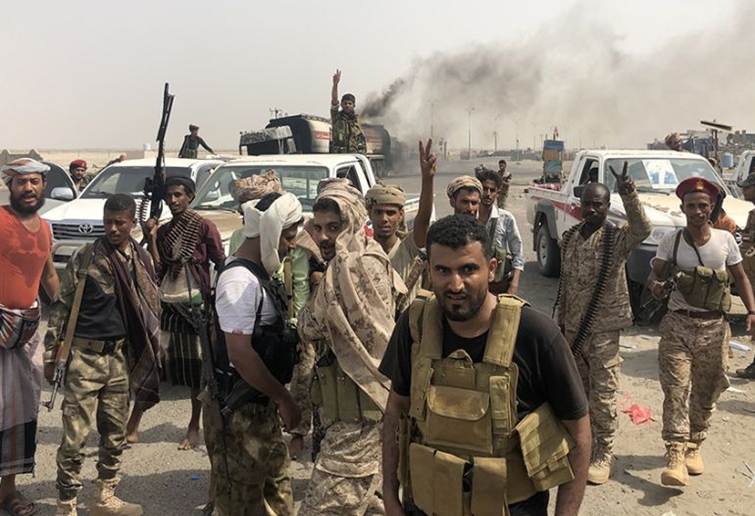
Why does the UAE/Saudi conflict in Yemen matter globally?: By way of background, on 30 December Saudi Arabia carried out airstrikes targeting weapons and armored vehicle shipments from the UAE in Yemen. Saudi claimed that weapons were destined for the UAE’s ally, the Southern Transitional Council (STC) separatists. Saudi claimed the shipments threatened regional security, while the UAE denied there were weapons in the cargos.
While many see this as strictly a regional conflict between two countries supporting different parties, analysts note it is broader than this.
Saudi Arabia is not completely opposed to a Southern Yemen
Saudi Arabia does not oppose the southern Yemeni cause or the right of southerners to self-determination. Analysts note that the Saudi position distinguishes clearly between the legitimate southern cause under the Yemeni Presidential Leadership Council (PLC), and the STC.
Riyadh’s concern is specifically with the STC as a military–political actor heavily influenced by external powers, particularly the UAE, and aligned—directly or indirectly—with Israeli-linked regional projects.
The issue is regional geopolitics, not an internal Yemeni dispute
Once external influence enters the equation, the southern file ceases to be a purely Yemeni matter. It becomes part of a broader regional and international struggle over influence, borders, energy routes, and trade corridors. This distinction is central to understanding Saudi Arabia’s position.
Hadramout is strategically vital to Saudi
Hadramout is the region where the port of Mukalla – i.e. where the strike took place – is located, and not a peripheral Yemeni province from a Saudi perspective.
It is also a key region for Saudi Arabia strategically. It is the only Yemeni governorate with a long, open land border with Saudi Arabia (400+ miles). And for the Saudis, it was important historically as a natural buffer zone – absorbing Yemeni instability before it reaches Saudi territory
Loss of influence over Hadramout would expose Saudi Arabia to increasing amounts of arms smuggling, militant infiltration, and chronic border insecurity
Energy security and alternative export routes are critical
Hadramout also contains key Yemeni oil assets and ports on the Arabian Sea.
For Saudi Arabia, this geography is strategically important as a potential alternative energy export corridor, reducing dependence on vulnerable chokepoints like the Strait of Hormuz – especially amid rising regional military threats.
The real danger is not separation, but the nature of the resulting state
KSA’s concerns are not about southern independence as a concept, but about what kind of state would emerge:
- formally sovereign but functionally dependent entity integrated into an Emirati-led maritime and trade network.
- Open to Israeli intelligence, security, and technological presence.
Such a state could be used to strategically encircle and pressure Saudi Arabia, even without formal foreign military bases.
Global competition over trade corridors intensifies the stakes
The conflict is unfolding amid a global struggle over economic corridors:
- Redirection of global trade away from traditional ports (Aden, Jeddah, Suez).
- Rise of a new axis linking Dubai–Fujairah–Haifa–Piraeus.
Control of southern Yemeni ports would grant influence over one of the world’s most critical trade and energy passageways, possibly marginalizing Saudi Arabia economically over the long term.
- As such, the Saudi strike on Mukalla was a calibrated strategic message.
It was deliberate, timed, and limited to avoid civilian or foreign casualties, designed to send three messages:
- To the STC: Saudi Arabia retains full military reach.
- To the UAE: Riyadh is closely monitoring Hadramout and drawing red lines.
- To the international community: the target was armed groups outside state legitimacy.
And the UAE response followed a familiar indirect strategy, highlighted by calm and disengagement at the official level, but accompanied by intense unofficial political, media, and local proxy activity.
Despite announcing its military withdrawal, the UAE continues to exercise indirect influence through local forces, alliances, and economic tools—indicating redeployment, not disengagement.
Saudi–Emirati relations are shifting from alliance to competition
Analysts believe it is important to view this issue via a regional and strategic lens.
The Yemen war initially produced a strong Saudi–Emirati alliance – with both parties working together to prevent the Houthis from seizing control over the entire country.
This has evolved.
Today, Saudi Arabia prioritizes Yemeni unity (or flexible federalism) as a security necessity, while the UAE views southern Yemen as a strategic maritime and commercial opportunity. This divergence has transformed the relationship into strategic competition, with consequences extending beyond Yemen.
And this is where a seemingly localized rift between two neighbors takes on a larger, regional dynamic.
Larger trends at play
This conflict also encapsulates two larger trends taking place.
The first is the competition between the leaders of the UAE and Saudi Arabia.
Muhammad Bin Zayid al-Nuhayyan – the President of the UAE – has seen himself as the de facto leader of the Gulf region for many years. The UAE has been at the precipice of economic, social, political and cultural development in the Middle East for the last 50 years.
While Saudi Arabia has always played a large role in the region, the rise of Muhammad bin Salman as the Crown Prince was seen as an opportunity for MBZ to guide and direct a protégé. And while this did take place for a moment, it quickly ended with MBS asserting himself via his ability to wrest control away from his family, consolidating control and authority to take the country into a new direction via the many mega-projects – to include NEOM.
The Yemen conflict is an extension of these growing tensions – with the UAE seeking to carve out influence in a country which has traditionally been in Saudi’s sphere of influence.
Evolving regional dynamics
However, more importantly, this conflict points to an evolving dynamic in the region – with two spheres of influence developing.
Specifically, analysts note that Saudi, Turkey and Egypt have come to be more closely aligned in opposition to the UAE and Israel.
The machinations of this started to develop with the Abraham Accords, when the UAE and Israel established close relationships – encouraging robust trade and cooperation across all sectors and fields. This has continued to drive both countries’ plans in the near and mid-term.
- For Saudi and Turkey – they both view the UAE as a threat to their role – individually – as the dominant power in the region. And while it may seem unlikely that Erdogan and MBS will work together, for the time being it is prudent.
- As for Egypt, while they share the UAE’s concern with Islamists and the Muslim Brotherhood, they also have been forced to distance themselves from Israel due to the ongoing war in Gaza. And while the UAE has invested heavily in Egypt, it is believed President Sisi likely sees more up potential from enhanced relations with Saudi and Turkey at this point.
These evolving dynamics are likely to continue to ebb and flow for some time. The uncertainty around Iran and the stability of the mullah-led regime also calls into question Iran’s ability to be a regional power – something the UAE and Saudi, along with others (Qatar and Turkey) would be keen to exploit for their own benefit.